
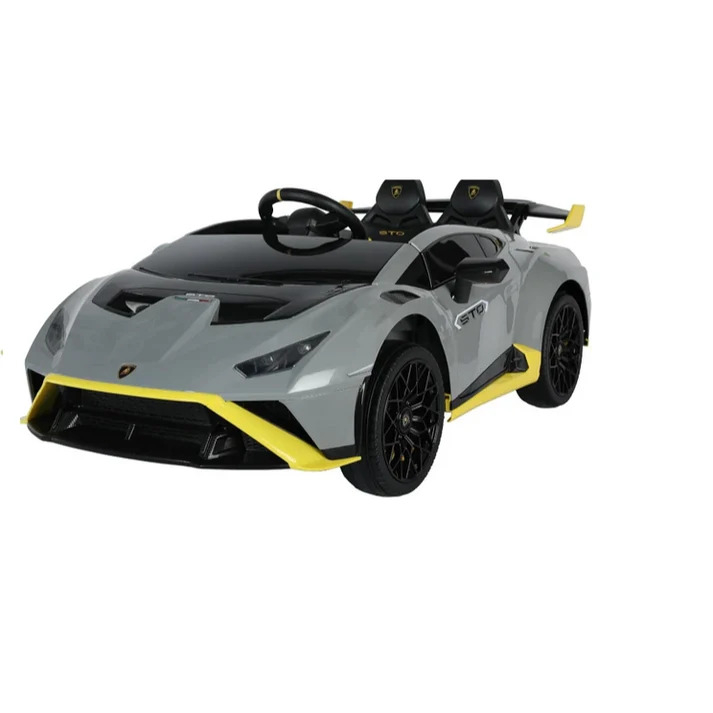
Choosing a battery-powered ride-on vehicle for your child often starts with a simple question: which design will they like? But once parents begin comparing different models, another question quickly becomes important: should you choose a 12V or 24V vehicle?
The difference isn't simply a number printed on the battery. Voltage can influence the power available to the motors, how the vehicle performs on different surfaces, and which age or experience level it may be better suited for.
If you're currently comparing kids ride on cars, understanding the difference between 12V and 24V systems can help you narrow down your options and avoid buying a vehicle that is either too powerful or not powerful enough for your child.
There is no universal answer to whether 12V or 24V is "better." The right choice depends on your child's age, weight, experience, riding environment, expected usage, and the specifications of the individual model.
In this guide, we'll break down the differences between 12V and 24V ride-on vehicles, explain what voltage actually means, and help parents decide which option makes more sense for their family.
What Does 12V or 24V Mean?
Before comparing the two, it's useful to understand what the voltage number represents.
A battery provides electrical energy to the vehicle's motor. Voltage is one of the factors that determines the electrical potential available to the system.
In simple terms:
12V = lower electrical voltage
24V = higher electrical voltage
However, it would be incorrect to assume that every 24V vehicle will automatically be twice as fast or twice as powerful as every 12V vehicle.
Performance depends on more than voltage.
Other factors include:
-
Motor configuration
-
Number of motors
-
Battery capacity
-
Vehicle weight
-
Rider weight
-
Tire design
-
Terrain
-
Speed controller
-
Gear system
-
Manufacturer configuration
This is why two vehicles with the same voltage can still provide noticeably different riding experiences.
12V Ride-On Cars Explained
12V systems are commonly found in smaller children's electric ride-on vehicles.
They can provide a practical balance between performance and manageable operation, particularly for younger riders.
A typical 12V model may be appropriate for:
-
Younger children
-
First-time riders
-
Gardens
-
Smooth driveways
-
Courtyards
-
Flat outdoor areas
-
Controlled indoor environments where permitted
The actual suitability always depends on the individual vehicle's specifications.
Why Do Parents Choose 12V?
There are several reasons.
Manageable Performance
Younger children may not need a highly powerful vehicle.
A 12V system can provide enough performance for recreational riding without necessarily being excessive for a beginner.
Suitable for Smaller Areas
If your child will mainly ride around a garden or driveway, you may not need the additional power of a larger 24V system.
Often More Compact
Many 12V vehicles are designed with smaller bodies, making them easier to store and maneuver.
Good Starting Point
For a child who has never used a ride-on vehicle before, a smaller, less powerful model can make the learning process easier.
24V Ride-On Cars Explained
24V systems generally provide greater electrical power to the vehicle's motors.
They are often found in larger ride-on vehicles designed for older or bigger children.
A 24V model may be more appropriate when:
-
The child is older
-
The child is heavier
-
The riding area is larger
-
Outdoor use is the primary purpose
-
The terrain is less smooth
-
The vehicle has multiple motors
-
A larger vehicle is required
Toyzinn's current car collection includes several 24V options, including larger SUVs, sports-style models, and multi-seat vehicles. Some models also feature multiple motors and parental remote controls.
| Feature | 12V | 24V |
| General power | Lower | Higher |
| Typical use | Younger riders | Older/larger riders |
| Suitable terrain | Mostly flat surfaces | More demanding outdoor surfaces |
| Vehicle size | Often smaller | Often larger |
| Beginner-friendly | Often suitable | Depends on model |
| Outdoor performance | Good for basic use | Generally stronger |
| Motor options | Single or multiple | Often multiple |
| Battery system | Lower voltage | Higher voltage |
| Storage | Usually easier | May require more space |
| Price | Often lower | Often higher |
Again, the vehicle's complete specifications should be considered rather than selecting a model based on voltage alone.
12V vs 24V: The Main Differences
Let's look at the key differences parents should consider.This table provides a general comparison, but individual models can vary considerably.
Does 24V Mean Twice the Speed?
No.
This is one of the most common misunderstandings.
A 24V vehicle doesn't necessarily travel at twice the speed of a 12V model.
The manufacturer controls the vehicle's speed through the motor, controller, gearing, and overall design.
Voltage mainly relates to the electrical system's available potential. Actual speed depends on how the manufacturer has configured the complete vehicle.
For parents, this means you shouldn't use voltage alone to determine whether a vehicle is safe or appropriate.
Instead, check the actual speed specification and the recommended age range.
Does 24V Mean Better Performance?
It can, but the answer depends on what you mean by performance.
A higher-voltage system can provide greater power potential, which may be beneficial for larger vehicles or more demanding riding conditions.
For example, a larger ride-on SUV carrying a heavier child may benefit from a more powerful electrical system.
However, if a small child is riding around a flat driveway, additional power may not provide any meaningful advantage.
The best performance is the performance that matches the intended use.
Which Voltage Is Better for Younger Children?
For younger children, a 12V model may often be the more sensible starting point.
This is especially true when:
-
The child is a beginner
-
The riding area is relatively small
-
The surface is flat
-
The child is within the model's recommended weight range
-
Parents want a manageable introduction to ride-on vehicles
A parental remote control can provide an additional layer of supervision.
However, age recommendations differ between products, so parents should never assume that all 12V models are appropriate for toddlers or young children.
Always read the individual product specifications.
Which Voltage Is Better for Older Children?
Older children may benefit from the additional power available in a 24V system.
A larger child can place more load on the motor, particularly when riding on grass or slightly uneven surfaces.
A 24V system can therefore be useful for:
-
Larger riders
-
Bigger vehicles
-
Longer outdoor rides
-
Multiple-motor configurations
-
More demanding surfaces
But once again, weight capacity matters just as much as age.
An older child who is relatively small may not require the same vehicle as a larger child of the same age.
Consider Your Child's Weight
One of the most important factors in the 12V vs 24V decision is rider weight.
The motor has to move the entire vehicle plus the rider.
As the load increases, the vehicle may require more power to maintain performance.
This is particularly noticeable when riding:
-
On grass
-
On inclines
-
On rough surfaces
-
At low battery levels
Before purchasing, check the manufacturer's maximum weight capacity.
Don't rely on age alone.
Consider the Riding Surface
The environment can change which voltage makes more sense.
Smooth Driveway
A 12V model may provide more than enough performance for a younger child riding on a flat driveway.
Grass
Grass can create additional resistance.
A more powerful system may perform better, especially when the rider is closer to the vehicle's maximum weight.
Slight Inclines
Inclines require more motor effort.
A 24V vehicle may be more appropriate for larger outdoor spaces with mild slopes, provided the manufacturer permits such use.
Uneven Terrain
Not every children's ride-on vehicle is designed for rough terrain.
Don't assume that buying a 24V vehicle automatically makes it suitable for off-road conditions.
The tires, suspension, ground clearance, motor configuration, and manufacturer's recommendations all matter.
Single Motor vs Multiple Motors
Voltage isn't the only thing that affects power.
Motor configuration can make a significant difference.
Some vehicles use a single motor, while others use two, four, or other configurations depending on the design.
For example, a 24V vehicle with multiple motors may provide a very different experience from a lightweight 24V model with a simpler configuration.
When comparing vehicles, look at:
-
Voltage
-
Number of motors
-
Motor output
-
Battery capacity
-
Vehicle weight
-
Recommended load
This gives you a much clearer picture of expected performance.
Battery Capacity Matters Too
Voltage and battery capacity are related but not identical.
Voltage tells you about the electrical potential of the system, while battery capacity indicates how much energy the battery can store.
A vehicle can therefore have a higher voltage without necessarily providing dramatically longer runtime.
Runtime depends on:
-
Battery capacity
-
Motor demand
-
Rider weight
-
Speed
-
Terrain
-
Driving habits
-
Temperature
This is why parents should avoid choosing a ride-on vehicle based solely on the "12V" or "24V" label.
Does 24V Cost More?
In many cases, 24V vehicles are more expensive than smaller 12V models.
But price depends on the complete vehicle.
A higher price may reflect:
-
Larger battery
-
More powerful motors
-
Larger body
-
Two-seat configuration
-
Licensed design
-
Additional features
-
Better suspension
-
Remote control
-
Improved tires
Therefore, comparing voltage alone won't explain the difference in price.
If you're working with a particular budget, compare the complete specifications and features rather than simply choosing the lowest-priced option.
Is 12V Better for Battery Life?
Not necessarily.
Battery runtime depends on multiple variables.
A 12V vehicle with a small battery and heavy load could provide less runtime than a well-designed 24V vehicle with a larger battery.
Similarly, a vehicle driven continuously at high power will generally consume more energy than one operated gently.
When comparing models, look at the manufacturer's stated runtime and charging information.
Remember that real-world runtime can vary.
How UAE Weather Can Affect Batteries
Parents in the UAE need to pay attention to storage conditions regardless of whether they choose 12V or 24V.
High temperatures can affect battery performance and long-term battery health.
Avoid storing a ride-on vehicle:
-
In direct sunlight
-
In an extremely hot enclosed space
-
Outdoors without protection
-
Near sources of excessive heat
A shaded, dry, and reasonably cool storage location is preferable.
It's also important to follow the manufacturer's charging recommendations.
12V vs 24V for Indoor Use
If you want to use the vehicle indoors, the smaller physical size and lower power of many 12V models can make them more practical.
However, parents should always consider:
-
Available floor space
-
Turning radius
-
Wheel material
-
Furniture
-
Walls
-
Stairs
-
Other people in the area
Not every ride-on vehicle is suitable for indoor use.
Even a small vehicle can cause damage to furniture or walls if operated carelessly.
12V vs 24V for Outdoor Use
Outdoor riding gives you more flexibility.
A 12V vehicle can be perfectly adequate for:
-
Flat driveways
-
Small gardens
-
Smooth paths
A 24V vehicle may be more useful for:
-
Larger gardens
-
Larger children
-
Longer riding sessions
-
Mild inclines
-
Grass
-
Larger outdoor spaces
But terrain suitability depends on the individual model.
Should Parents Buy 24V to "Grow Into"?
This is a common thought.
A parent may reason that buying a more powerful vehicle now will mean the child can use it for longer.
Unfortunately, this isn't always the best approach.
A vehicle that is too powerful or too large can be difficult for a younger child to control.
Instead of buying far ahead of your child's current needs, look for a model that is suitable now and has enough capacity for reasonable growth.
Safety and usability should come before future-proofing.
What About Two-Seater Ride-On Cars?
If you're considering a two-seater, the voltage decision becomes even more important.
Two children can create a significantly higher combined load than one child.
Before buying, check:
-
Maximum total weight
-
Recommended age
-
Motor configuration
-
Battery voltage
-
Seat dimensions
-
Manufacturer's seating recommendation
A two-seat vehicle isn't automatically designed to carry two children simultaneously at maximum weight.
Always follow the individual model's specifications.
Don't Forget the Parental Remote
A parental remote can be useful regardless of whether the vehicle is 12V or 24V.
For younger children, it allows parents to intervene if the vehicle:
-
Moves toward an obstacle
-
Approaches an unsafe area
-
Needs to stop quickly
-
Becomes difficult for the child to control
If you're buying a more powerful vehicle for an older child, a remote can still provide useful supervision during the learning stage.
Safety Should Always Come First
The most powerful vehicle isn't automatically the best choice.
Parents should consider:
-
Age suitability
-
Weight capacity
-
Speed
-
Braking
-
Seatbelt
-
Remote control
-
Tire condition
-
Riding surface
-
Adult supervision
Children should never operate ride-on vehicles on public roads or around moving traffic.
Swimming pools, stairs, steep slopes, and crowded areas should also be avoided.
The objective is to create a controlled environment where the child can enjoy riding without unnecessary hazards.
12V vs 24V: A Simple Decision Guide
Still unsure?
Use this basic framework.
Choose 12V if:
-
Your child is younger
-
They are new to ride-on vehicles
-
They will mostly ride on flat surfaces
-
You have limited outdoor space
-
You prefer a smaller vehicle
-
You don't need maximum power
Consider 24V if:
-
Your child is older or larger
-
They already have riding experience
-
You have a larger outdoor area
-
The vehicle will regularly operate on grass
-
You want stronger performance
-
The specific model is designed for your child's age and weight
These are general guidelines rather than strict rules.
Always compare the actual manufacturer's specifications.
How to Compare Two Models Properly
Imagine you're comparing two vehicles.
Model A:
-
12V
-
Single seat
-
One motor
-
Smaller body
-
Lower weight capacity
Model B:
-
24V
-
Two seats
-
Multiple motors
-
Larger body
-
Higher weight capacity
If your child is four years old and will ride alone in a small garden, Model A might make more sense.
If you have older children who want to share the vehicle and have a larger outdoor space, Model B could be more appropriate.
The point is that the specifications need to match the situation.
There is no universally superior voltage.
What Should Parents Prioritise?
When choosing between two vehicles, consider these factors in this order:
1. Age suitability
Is the vehicle appropriate for your child?
2. Weight capacity
Can it safely accommodate the rider?
3. Speed and control
Can your child manage the vehicle?
4. Riding environment
Is it suitable for where you plan to use it?
5. Safety features
Does it provide the controls and protection you expect?
6. Battery and motor system
Does the performance match your needs?
7. Features
Are the additional features useful to your child?
8. Design
Does your child actually like it?
9. Price
Does the overall package represent good value?
This approach prevents parents from focusing too heavily on one specification.
Final Thoughts
The 12V vs 24V decision doesn't have to be complicated.
Instead of asking which voltage is universally better, ask which one is better for your child.
A younger or inexperienced rider who will spend most of their time on a flat driveway or garden may have everything they need from a suitable 12V model. An older or larger child who wants to ride outdoors and needs stronger performance may benefit from a 24V vehicle.
But voltage is only one part of the equation.
Age, weight capacity, motor configuration, battery capacity, speed, tires, terrain, seating, safety features, and parental controls all influence the actual riding experience.
The best approach is to compare the complete specifications and select a vehicle that matches your child's current abilities and your family's intended use.
If you're ready to compare different models, take a look at the kids ride on cars available in the collection and compare their battery systems, designs, seating arrangements, and features before making a decision.
Most importantly, don't feel pressured to choose the most powerful option. A well-matched ride-on vehicle will usually provide a better experience than one selected simply because it has a larger battery or higher voltage.
With the right model, proper supervision, sensible riding habits, and good battery care, a ride-on vehicle can become an enjoyable part of your child's outdoor play for years to come.
For parents looking for more options beyond ride-on vehicles, baby toys can also be explored as part of a wider collection of products designed for children's play and entertainment.
Frequently Asked Questions
Are 24V ride-on cars better than 12V?
Not necessarily. A 24V system generally provides greater power potential, but a 12V vehicle can be a better choice for younger children, smaller riding areas, and less demanding use.
What age is suitable for a 12V ride-on car?
It depends on the specific model. Parents should check the manufacturer's age, height, and weight recommendations rather than relying solely on voltage.
Are 24V cars safe for children?
They can be when the vehicle is appropriate for the child's age and weight and is used under proper supervision. More power makes correct model selection particularly important.
Does a 24V car go twice as fast?
No. Voltage doesn't directly determine the vehicle's final speed. Motor configuration, gearing, controller settings, and manufacturer design all affect speed.
Which is better for grass, 12V or 24V?
A 24V model may provide stronger performance on grass, particularly for larger riders, but the vehicle must also have suitable tires, motors, and ground clearance.
Does 24V mean longer battery life?
No. Battery runtime depends on capacity, motor demand, rider weight, terrain, speed, and other factors.
Should I buy a 24V vehicle for a young child so they can grow into it?
Generally, choose a vehicle that is appropriate for the child's current age, size, and experience rather than buying significantly more power than they can comfortably control.
Is a parental remote important?
It can be particularly valuable for younger or inexperienced riders because it allows an adult to intervene when necessary.

 Arabic
 French
 Spanish
 Portuguese
 Deutsch
 Turkish
 Dutch
Dutch
 Italiano
 Russian
 Romaian
 Portuguese (Brazil)
 Greek
Greek