
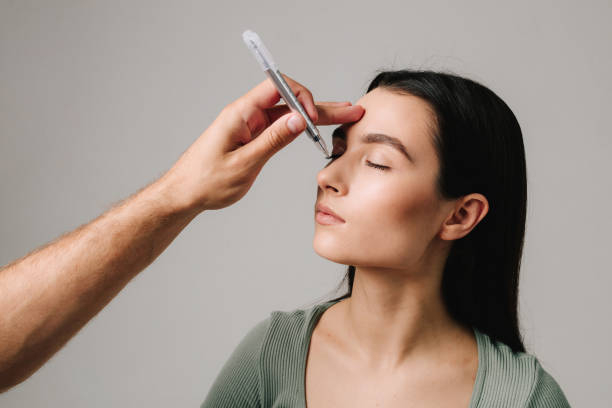
Nasal asymmetry can involve the bridge, tip, nostrils, nasal bones or underlying cartilage. Rhinoplasty Dubai can be used in selected patients to improve these structural differences, but effective planning starts by identifying what is actually causing the asymmetry.
Why Nasal Asymmetry Happens
Nasal bones can develop unevenly
The upper portion of the nose is supported by paired nasal bones. Small differences in their position or width can contribute to an uneven appearance when viewed from the front.
These differences may become more noticeable when the face is photographed from straight ahead.
Cartilage can create visible asymmetry
The cartilage forming the middle and lower nose can also differ from one side to the other.
Possible concerns include:
- Uneven nasal tip position
- Different nostril shapes
- Asymmetric alar cartilage
- Uneven bridge contour
- Irregular columella position
Previous trauma can alter nasal structure
An impact to the nose can change the position of bone, cartilage or the septum.
Some patients may remember a specific injury, while others notice gradual changes in appearance or breathing without connecting them to an earlier event.
Rhinoplasty Dubai Requires More Than a Front-View Assessment
Front-view analysis
The front view helps identify whether the nasal structure appears shifted relative to the facial midline.
The surgeon may assess:
- Bridge alignment
- Tip position
- Nasal width
- Nostril symmetry
- Facial midline
- Relationship between the nose and surrounding structures
Profile analysis
Asymmetry can sometimes appear different from the side.
Profile assessment can reveal differences in tip projection, dorsal contour or nasal length that may not be obvious from the front.
Base-view analysis
Looking upward from beneath the nose can provide important information about the nasal base.
This can reveal differences in nostril shape, alar contour and columellar position that are difficult to assess from standard photographs.
Structural Versus Visual Nasal Asymmetry
Structural asymmetry
Structural asymmetry involves differences in the underlying framework.
Examples can include:
- Deviated nasal bones
- Uneven cartilage
- Septal deviation
- Asymmetric tip cartilage
- Post-traumatic structural changes
When structural differences are significant, treatment planning needs to address the framework rather than only the visible surface.
Soft-tissue asymmetry
The skin and soft tissue surrounding the nasal framework can also affect appearance.
Even when the underlying cartilage is relatively balanced, differences in soft-tissue thickness can make one side look different from the other.
This is particularly important when discussing expected results.
Nasal Asymmetry and Breathing
Cosmetic and functional concerns can overlap
A visibly crooked nose can sometimes be associated with internal structural changes that affect airflow.
The septum, nasal valves, turbinates and surrounding structures can all influence nasal breathing.
Patients who experience persistent difficulty breathing through one side of the nose should discuss the symptom during consultation rather than treating it solely as an aesthetic concern.
Assessment should consider nasal function
A comprehensive evaluation can help determine whether the primary concern is cosmetic, functional or a combination of both.
The appropriate surgical plan depends on the findings rather than the appearance alone.
Rhinoplasty Dubai and Realistic Symmetry
Perfect symmetry is not always achievable
The human face is naturally asymmetric.
Rhinoplasty can improve a visible difference, but it cannot guarantee perfectly identical right and left sides.
The final appearance can also be influenced by:
- Existing facial asymmetry
- Skin thickness
- Scar tissue
- Cartilage memory
- Postoperative swelling
- Individual healing
Improvement is different from complete elimination
A realistic treatment goal is often to make asymmetry less noticeable while preserving nasal function and structural support.
This distinction should be discussed clearly before surgery.
When a Closed Approach May Be Considered
Selected cases of nasal asymmetry may be suitable for a closed rhinoplasty technique when the required structural corrections can be performed through internal incisions.
The approach depends on the extent and location of the asymmetry, the patient's anatomy and the surgeon's treatment plan.
You can learn more about closed rhinoplasty in Dubai when exploring whether an internal-incision approach may be appropriate for your nasal concerns.
More complex structural asymmetry may require another surgical approach. The decision should be made after direct examination rather than based on the patient's preferred technique alone.
Common Questions About Nasal Asymmetry
Is every crooked nose caused by a deviated septum?
No. Asymmetry can involve the nasal bones, cartilage, septum, soft tissue or several structures at the same time.
Can rhinoplasty make the nose perfectly straight?
Surgery can improve structural alignment, but absolute symmetry cannot always be achieved because facial anatomy and healing are inherently variable.
Can asymmetry become visible again after surgery?
Changes during healing can affect the final appearance. Residual swelling, tissue behavior and the original structural characteristics can influence the long-term result.
The Rhinoplasty Dubai Assessment Process
A detailed evaluation may include:
- Medical and nasal history.
- Discussion of previous injuries or nasal surgery.
- Examination of the external nasal framework.
- Assessment of the septum and nasal airway.
- Front, profile and base-view analysis.
- Evaluation of facial symmetry.
- Identification of the primary structural cause.
- Selection of an appropriate surgical strategy.
- Discussion of realistic expectations and recovery.
This process helps separate the visible symptom from the anatomical cause.
Recovery After Rhinoplasty Dubai for Nasal Asymmetry
Swelling can temporarily make asymmetry look more pronounced after surgery. Early differences should therefore be interpreted cautiously while the tissues are healing.
Patients should protect the nose from accidental impact and follow all postoperative instructions concerning exercise, sleeping position, sun exposure and follow-up care.
Why patience matters
The nasal tip and surrounding soft tissue can remain swollen longer than expected. Gradual changes are normal during healing, so the final assessment should be based on the longer-term result rather than the first few weeks.
Discuss Nasal Asymmetry With Tajmeels Clinic
Tajmeels Clinic in Dubai focuses on individualized nasal assessment rather than treating every asymmetric nose with the same technique. Understanding whether the difference originates from bone, cartilage, septal structure or soft tissue is an important part of developing an appropriate surgical plan.
If you are considering Rhinoplasty Dubai for nasal asymmetry, Tajmeels Clinic can provide a personalized consultation focused on your nasal structure, facial proportions, breathing concerns and realistic treatment goals.

 Arabic
 French
 Spanish
 Portuguese
 Deutsch
 Turkish
 Dutch
Dutch
 Italiano
 Russian
 Romaian
 Portuguese (Brazil)
 Greek
Greek