
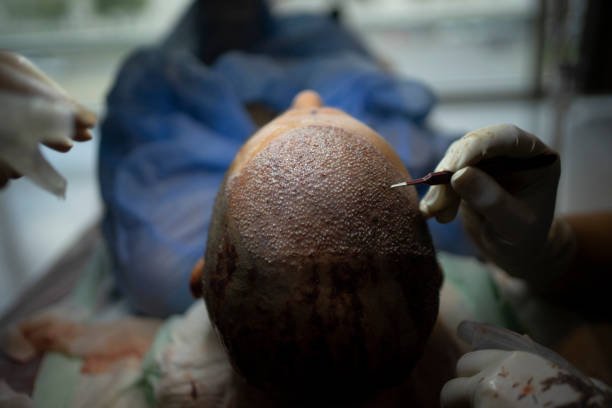
Scalp flexibility is an important consideration when planning strip-based hair restoration. FUT Hair Transplant in Dubai requires removal of a strip of donor scalp followed by closure of the incision, so adequate scalp laxity helps the surgeon bring the wound edges together without excessive tension.
Laxity differs between individuals and can vary across the scalp. It is one of the factors that helps determine how much donor tissue can be safely harvested.
What Is Scalp Laxity?
Scalp laxity describes how readily the scalp tissue can move and stretch over the skull.
The skin and underlying connective tissue have a degree of mobility, but this varies from person to person. A flexible scalp may allow easier closure after strip removal, while a tight scalp can make closure more challenging.
Why Laxity Matters During FUT
When a donor strip is removed, the surrounding scalp must be brought together. If the tissue cannot move sufficiently, greater tension may be placed on the incision.
Excessive tension can contribute to discomfort and may increase the risk of a wider scar or delayed wound healing.
Laxity and Strip Size
The surgeon considers scalp flexibility when determining the dimensions of the donor strip.
A larger strip is not automatically better. The amount that can be safely harvested depends on donor density, scalp mobility, closure considerations, and the patient’s overall treatment plan.
Laxity and Scar Appearance
Scar formation is influenced by multiple factors, but incision tension is an important consideration.
Careful planning aims to minimize unnecessary tension and create an appropriate donor closure. Even with good technique, individual healing can affect the final scar.
What Can Influence Scalp Flexibility?
Several characteristics may affect scalp mobility.
- Natural tissue elasticity.
- Previous scalp surgery.
- Existing donor scars.
- Skin and connective-tissue characteristics.
- The location and dimensions of the planned strip.
- Previous FUT procedures.
A previous procedure can change the tissue structure and must be considered during assessment.
Can Scalp Laxity Change Over Time?
Scalp flexibility can vary after previous surgery or changes in tissue characteristics. A patient who has undergone earlier strip harvesting may have different scalp mobility during a later procedure.
This is why previous hair transplant records and surgical history are useful during consultation.
For more information about the FUT technique and donor assessment, explore FUT hair transplant in Dubai at Tajmeels Clinic.
Questions Patients Often Ask
Can someone with a tight scalp undergo FUT?
Not necessarily. Limited laxity may affect whether strip harvesting can be performed safely. The surgeon needs to assess the scalp before recommending the procedure.
Can scalp exercises guarantee better laxity?
There is no guarantee that exercises will create sufficient surgical laxity. Patients should rely on clinical assessment rather than attempting aggressive stretching themselves.
Does high scalp laxity guarantee a small scar?
No. Scar width also depends on closure technique, wound healing, tissue tension, and individual scar formation.
Why Laxity Assessment Belongs in FUT Planning
Scalp laxity connects donor harvesting, wound closure, comfort, and scar formation. Assessing it before surgery allows the treatment plan to be tailored to the patient rather than relying on a fixed graft target.
For a personalized evaluation of donor suitability and FUT planning, visit Tajmeels Clinic.

 English
 Arabic
 Spanish
 Portuguese
 Deutsch
 Turkish
 Dutch
Dutch
 Italiano
 Russian
 Romaian
 Portuguese (Brazil)
 Greek
Greek