
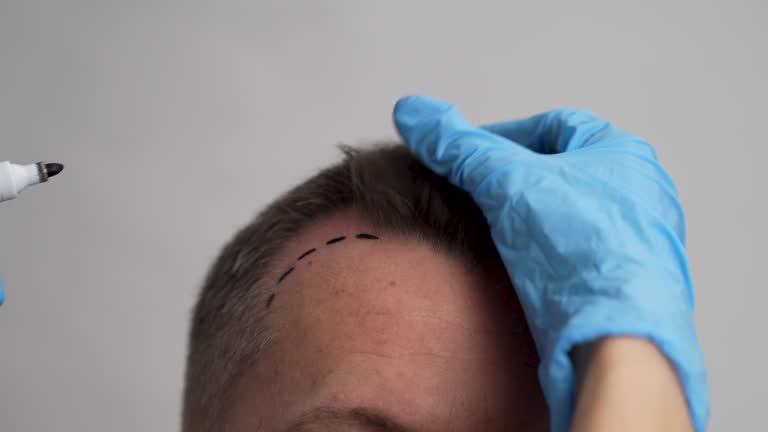
Choosing the right grafts is one of the most important details in Sideburn Hair Transplant in Dubai. Unlike scalp coverage, sideburn restoration involves a highly visible facial area where differences in hair thickness, texture, curl, and follicular unit size can quickly affect the natural appearance.
A successful design therefore depends on more than simply having enough donor hair. The grafts need to behave and look appropriate for the specific facial area being reconstructed.
Why Graft Selection Matters in Sideburn Restoration
Sideburn hair has a different visual role from the hair on the top of the scalp. It frames the side of the face and creates a transition between the temple, ear, cheek, and beard region.
If grafts are too thick or contain too many hairs, the transplanted area can appear heavier than the surrounding facial hair. If they are too fine, the restored sideburn may lack the visual structure needed to blend with existing growth.
This makes graft selection a form of aesthetic matching rather than simple hair redistribution.
Single-Hair Units for Refined Facial Edges
Single-hair follicular units are particularly useful when creating or rebuilding the visible outer edge of a sideburn.
A single follicle allows the surgeon to produce a softer transition rather than placing a dense cluster immediately at the boundary. This can help the reconstructed area merge gradually with neighboring facial hair.
Multi-Hair Units Have a More Limited Role
Grafts containing two or more follicles may have a place farther inside an area where additional fullness is required. However, using larger follicular units indiscriminately can create an unnatural appearance.
The number of hairs within each graft is therefore considered during planning rather than treated as irrelevant.
Hair Caliber Is Considered During Graft Selection
Hair thickness has a major influence on how transplanted sideburns look.
A very thick scalp hair may produce more visual bulk than a naturally fine facial hair. For some patients, a finer donor hair can create a more convincing result, particularly around the front or upper border of the sideburn.
The surgeon evaluates the caliber of available donor follicles before deciding which units are most appropriate.
Matching Thickness With Existing Facial Hair
Existing sideburn and beard hair provide a useful reference. If surrounding facial hair is fine, inserting very coarse follicles can make the transplanted region stand out.
Conversely, when existing facial hair is naturally robust, slightly stronger grafts may integrate more effectively.
The objective is visual continuity rather than simply maximizing the diameter of each transplanted hair.
Texture and Curl Can Influence the Result
Hair texture changes how a graft behaves after it grows.
Straight, wavy, and curly hair can occupy space differently. A curly follicle may produce more apparent coverage than a straight follicle with the same number of hairs because the shaft bends away from the skin.
This is particularly relevant when planning facial hair restoration around areas where hair direction is already established.
Color Also Affects Visual Matching
Hair color and skin tone influence contrast. Dark, coarse hair against lighter skin can appear more prominent, while lighter or finer hair may create a softer visual effect.
Graft selection takes these characteristics into account alongside follicle structure.
Donor Hair Is Evaluated at the Individual Graft Level
Donor harvesting is not simply about taking an arbitrary group of follicles from a suitable region.
During FUE-based restoration, individual follicular units can vary considerably. Some contain one hair, others two or more. Their caliber and structural characteristics can also differ.
This creates an opportunity for selective use.
Suitable Grafts Can Be Allocated to Specific Areas
The surgeon may separate or prioritize grafts according to their characteristics. Finer single-hair units can be useful for delicate borders, while appropriate thicker units may be considered for internal fullness.
This approach allows the final placement pattern to be more controlled.
Graft Integrity Matters Before Implantation
A graft can have excellent hair characteristics but still be unsuitable if its follicular structures are damaged during extraction or handling.
Hair follicles are living tissue. Excessive mechanical manipulation, drying, compression, or unnecessary handling can compromise graft viability.
For this reason, grafts are handled carefully between extraction and implantation.
Keeping Follicular Structures Protected
After extraction, grafts are maintained under appropriate conditions until they are ready for placement. Minimizing unnecessary exposure and manipulation helps protect the delicate follicular structures.
The quality of handling is therefore part of the overall restoration process, not a separate technical detail.
The Direction of Existing Hair Helps Guide Selection
Graft selection and graft placement work together.
The surgeon studies the direction in which the patient's existing sideburn hair emerges from the skin. This helps determine which graft characteristics will work best within that pattern.
A suitable graft placed at the wrong angle can still look unnatural. Likewise, an appropriately selected graft becomes much more convincing when it follows the surrounding anatomy.
Facial Proportions Influence Graft Distribution
Sideburns are not isolated patches of hair. Their appearance interacts with the temple, ear, cheek, beard, jawline, and overall facial proportions.
For some patients, only a relatively small number of carefully selected follicles may be required to restore a missing edge. Others may need additional coverage because the sideburn is naturally sparse throughout its visible area.
Graft selection therefore follows the design rather than determining the design on its own.
What Happens to Grafts That Are Not Suitable
Not every extracted follicular unit has to be used.
A surgeon may exclude grafts that do not meet the requirements for the planned facial restoration. This is especially important when the desired result calls for a delicate transition.
Using every available graft simply because it has been extracted is not necessarily the best aesthetic strategy.
Clinic note: Natural facial hair restoration depends on matching the characteristics of the graft to the area being reconstructed. Follicle count, hair caliber, texture, curl, and graft integrity can all influence how seamlessly a sideburn blends with existing facial hair.
Why Graft Selection Requires Facial Hair Expertise
Scalp transplantation and facial hair transplantation share many surgical principles, but the aesthetic demands are different.
The sideburn sits directly within the visual framework of the face. Small differences in density or follicular characteristics can therefore be easier to notice than comparable differences in a less visible area of the scalp.
This is why sideburn restoration requires careful assessment of both donor follicles and facial anatomy.
A Personalized Approach to Sideburn Graft Selection
There is no universal graft type that is ideal for every patient.
A personalized assessment considers:
- Existing sideburn density
- Hair caliber
- Follicular unit composition
- Hair texture and curl
- Hair and skin contrast
- Existing facial hair pattern
- Donor-area characteristics
- Desired sideburn shape
- Facial proportions
- Areas requiring the softest transition
This produces a more controlled foundation for transplantation.
Choosing the Right Grafts for a Natural Result
The quality of sideburn restoration is influenced by many small decisions. Selecting follicles that visually and structurally complement the patient's existing facial hair can make the difference between an obvious transplant and a seamless-looking restoration.
For patients considering Sideburn Hair Transplant in Dubai, a consultation with Tajmeels Clinic can help determine which graft characteristics are appropriate for the planned sideburn design.

 English
 Arabic
 French
 Spanish
 Portuguese
 Deutsch
 Turkish
 Dutch
Dutch
 Italiano
 Russian
 Romaian
 Portuguese (Brazil)