
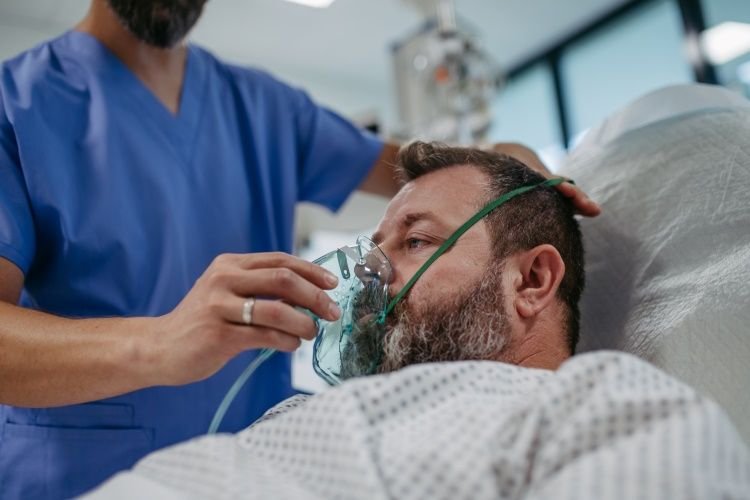
Home ventilation can provide essential breathing support for patients who cannot breathe adequately on their own or need assistance due to certain medical conditions. Understanding the different types of ventilators helps families discuss suitable options with their healthcare providers and prepare for ongoing care. Ventilator Care At Home In Dubai enables eligible patients to receive respiratory support in a familiar environment with guidance from qualified healthcare professionals. A Doctor at Home service may also help coordinate medical assessments and follow-up when clinically appropriate. However, the right ventilator depends on the patient's diagnosis, breathing needs, prescribed treatment, and level of monitoring required—not simply personal preference or convenience.
What Is a Home Ventilator and How Does It Work?:
A home ventilator is a medical device that supports or assists breathing by moving air into and, depending on the system, out of the lungs. It may be prescribed for patients with conditions that affect respiratory muscles, lung function, or the body's ability to maintain adequate ventilation. Some devices provide breathing support through a mask, while others connect to an artificial airway, such as a tracheostomy tube. Ventilators differ in their features, settings, portability, and monitoring requirements. The treating clinician determines whether ventilation is necessary, selects the appropriate device, and prescribes its settings. Patients and caregivers should receive training before using the equipment at home.
Invasive Ventilators for Patients Requiring Airway Support:
Invasive ventilation delivers breathing support through an artificial airway, often a tracheostomy tube, and may be necessary for patients who need long-term or more comprehensive respiratory assistance. It can be used in certain cases involving severe respiratory muscle weakness, neurological conditions, or other complex medical needs. Because the airway is directly connected to the ventilation system, patients may require specialized airway care, secretion management, equipment monitoring, and a carefully planned emergency response. Invasive ventilation usually requires a higher level of caregiver training and clinical coordination than simpler forms of respiratory support. The care team determines the appropriate monitoring arrangements and explains how to respond to alarms, airway problems, or changes in the patient's condition.
Non-Invasive Ventilators for Mask-Based Breathing Support:
Non-invasive ventilation provides breathing assistance through an external interface, such as a mask covering the nose or the nose and mouth, rather than through a tracheostomy tube. It is commonly used for selected patients with conditions such as certain forms of chronic respiratory failure, neuromuscular weakness, or sleep-related breathing disorders when prescribed by a clinician. The device provides pressure support to help breathing and may be used during sleep, for specific periods during the day, or according to an individualized treatment plan. Comfort and proper mask fit are important because air leaks, pressure marks, or discomfort can affect use. Patients should seek professional advice about mask selection and fit rather than changing prescribed settings independently.
Portable Ventilators for Patients With Mobility Needs:
Portable ventilators are designed to support patients who need respiratory assistance while moving around the home or traveling to appropriate appointments. Depending on the model and prescription, these devices may be lighter or more compact than stationary systems and may support battery operation. Portability can help eligible patients participate in daily activities, but it does not remove the need for monitoring, safe equipment handling, and backup planning. Before leaving home, caregivers should confirm that the device is appropriate for the planned activity, batteries are adequately charged, required supplies are available, and emergency arrangements are in place. Travel plans should be discussed with the healthcare team, particularly for patients who rely continuously on ventilation.
Volume-Controlled and Pressure-Controlled Ventilation:
Ventilators may use different methods to deliver prescribed breathing support, including volume-controlled and pressure-controlled approaches. In volume-controlled ventilation, the device is configured to deliver a prescribed volume of air with each supported breath, subject to the system's operating characteristics and the patient's respiratory mechanics. In pressure-controlled ventilation, the device delivers support according to a prescribed pressure target, while the resulting breath volume can vary with factors such as lung and chest-wall mechanics. Other ventilation modes combine or modify these approaches to meet individual needs. These technical differences matter when clinicians select and adjust treatment, but caregivers should not attempt to choose a mode or alter settings independently. Ventilator programming must be managed by authorized healthcare professionals.
BiPAP and CPAP Devices: Understanding the Difference:
Continuous positive airway pressure (CPAP) and bilevel positive airway pressure (BiPAP or bilevel ventilation) are often discussed alongside home ventilators, although they serve different purposes and are not interchangeable in every situation. CPAP generally provides one continuous pressure level to help keep the upper airway open, commonly for obstructive sleep apnea. Bilevel devices provide different pressure levels during inhalation and exhalation and may be prescribed for selected patients who need additional breathing support. Some advanced bilevel devices include backup breathing features, depending on the model and prescription. The correct device depends on the diagnosis and clinical assessment. Patients should not substitute one device for another or change pressure settings without medical direction.
Choosing the Right Home Ventilator for the Patient:
The most suitable device is selected according to medical requirements rather than brand popularity or price alone. A healthcare professional evaluates the patient's diagnosis, breathing pattern, need for daytime or overnight support, airway status, mobility, and ability to use the equipment safely. Other practical considerations include caregiver availability, noise levels, interface comfort, battery backup, alarm features, and access to technical support. Families should ask the clinical team to explain why a particular device has been recommended and what training will be required. Important points to discuss include:
-
Whether invasive or non-invasive ventilation is prescribed.
-
How long the patient needs respiratory support each day.
-
Which alarms and monitoring features are necessary.
-
What backup equipment and power arrangements are required.
-
How routine cleaning, servicing, and replacement supplies are managed.
-
Who to contact if the device malfunctions or the patient's condition changes.
The final choice should be guided by the treating clinician and the patient's individualized care plan.
Maintaining Home Ventilator Equipment Safely:
Correct equipment care helps maintain reliable operation and supports a safer home environment. Families should follow the manufacturer's instructions and the clinical team's guidance for cleaning, inspecting, and replacing approved components. Tubing, filters, masks, humidification systems, and other accessories may have specific care requirements that vary by device. Caregivers should learn the meaning of alarms and know the appropriate response to each warning. It is also important to keep equipment away from hazards, arrange cables and tubing to reduce trip risks, and maintain prescribed backup power arrangements. Any damaged components, repeated alarms, or suspected equipment failure should be addressed promptly according to the emergency plan. Only qualified personnel should carry out technical servicing or authorized setting changes.
The Role of Professional Home Healthcare in Ventilator Care:
Professional home healthcare can help patients and families manage the practical and clinical demands of long-term ventilation. Depending on the care plan, trained staff may assist with respiratory observations, prescribed airway care, hygiene, medication routines, equipment checks, and caregiver education. They can also document relevant changes and communicate concerns to the treating clinician. Families should confirm that staff have suitable training for the patient's specific ventilation method and understand the emergency procedures. For patients receiving Ventilator Care At Home In Dubai, a personalized service plan can help coordinate care responsibilities and clarify when professional assessment is needed. Home healthcare does not replace the treating medical team; it works alongside clinical supervision to support the patient's prescribed treatment.
Recognizing Problems and Knowing When to Seek Help:
Caregivers should know the patient's usual condition and understand which changes require urgent attention. Warning signs may include worsening breathlessness, unusual drowsiness, changes in prescribed oxygen saturation readings, fever, increased or unusual secretions, or repeated ventilator alarms. Severe breathing difficulty, blue or grey lips, loss of consciousness, or suspected interruption of essential ventilation requires immediate action under the patient's emergency plan and may require emergency services. Caregivers should never ignore alarms, disconnect equipment without guidance, or adjust ventilator settings in an attempt to resolve an unfamiliar problem. Written instructions, emergency contact details, and regular training help families respond more effectively when difficulties arise.
Final Thoughts.
Understanding the different types of home ventilators helps families make informed decisions in partnership with qualified healthcare professionals. Invasive and non-invasive ventilators, portable systems, and different ventilation modes serve distinct purposes, so the right option must be based on an individualized medical assessment. Safe home ventilation also depends on equipment maintenance, caregiver training, appropriate monitoring, and a clear emergency plan. With professional guidance and a coordinated care approach, Ventilator Care At Home In Dubai can help eligible patients receive respiratory support in a familiar environment while keeping safety and comfort central to everyday care.

 English
 Arabic
 Spanish
 Portuguese
 Deutsch
 Turkish
 Dutch
Dutch
 Italiano
 Russian
 Romaian
 Portuguese (Brazil)
 Greek
Greek