
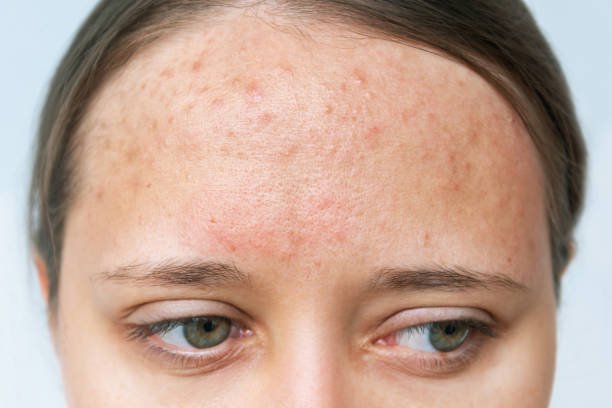
If there's one question that dominates conversations about laser acne scar treatments, it's this: how many sessions will I need? The honest answer is that there's no universal number—session counts range from three or four for mild scarring to eight or more for severe, complex cases. Laser Acne Scar Treatments in Riyadh What determines your number isn't guesswork; it's a combination of scar type, severity, skin tone, treatment technology, and how your skin responds. This guide explains what drives session counts, what ranges to expect, and how to plan realistically.
The Typical Range
Most patients require somewhere between three and six sessions for noticeable improvement, though this varies widely. Mild scarring—superficial, limited in area—may improve with three to four sessions. Moderate scarring typically requires four to six. Severe or complex scarring—deep icepick scars, extensive areas—may need six to eight or more. Some patients combine lasers with other treatments, which can affect session counts. These ranges reflect real-world outcomes—not promises. Anyone quoting a fixed number before assessing your skin is guessing.
What Drives Your Session Count
Several factors interact to determine how many sessions you'll need. Scar type matters most—rolling and boxcar scars often respond faster than icepick scars. Scar depth affects how much remodeling is required. The total area being treated influences session count. Skin tone affects which lasers are safe and how aggressively settings can be adjusted. Treatment technology—fractional versus non-fractional, ablative versus non-ablative—influences efficiency. And your individual collagen response determines how well your skin remodels between sessions.
Scar Type and Severity
Different scars respond at different rates. Rolling scars—caused by fibrous bands tethering skin—often improve with resurfacing treatments over several sessions. Boxcar scars—broad depressions—typically respond well but require multiple sessions to build collagen. Icepick scars—narrow, deep pits—are the most stubborn; lasers may soften them, but complete improvement often requires additional techniques. The more severe and varied your scarring, the more sessions you're likely to need—and the more likely combination treatments will be recommended.
Skin Tone Considerations
Darker skin tones require more conservative settings to avoid pigmentation risks—which can mean more sessions to achieve comparable results. This isn't a disadvantage; it's appropriate care. Providers experienced with diverse skin types adjust energy levels and spacing to prioritize safety while still producing improvement. If you have darker skin, expect your provider to discuss this openly—and don't interpret conservative settings as inadequate treatment. Safety and results go together.
Treatment Technology
Laser technology influences session counts. Fractional lasers—which create microscopic treatment zones—often require multiple sessions but offer gradual, safer improvement. Ablative lasers—more aggressive—may produce more dramatic results per session but require longer recovery and carry higher risks. Non-ablative options are gentler but may need more sessions. Your provider selects technology based on your scars, skin tone, and tolerance for downtime—and the session count reflects that choice.
How Spacing Affects Total Timeline
Sessions are typically spaced four to eight weeks apart to allow collagen remodeling and skin healing between treatments. This means a six-session plan spans roughly six to twelve months, depending on spacing. Understanding this timeline helps you plan realistically—treatment is a marathon, not a sprint. Rushing sessions closer together doesn't accelerate results; it may compromise healing. Patience with spacing is part of the protocol.
How to Estimate Your Sessions
During consultation, ask your provider to walk through your specific factors: scar types, depth, area, and skin tone. Request a realistic range rather than a single number, and ask what improvement they expect per session. Review before-and-after examples of patients with similar scars. While no estimate is perfect, a provider who explains the reasoning behind their estimate—referencing your skin—is giving you something more valuable than a promise.
What Can Reduce Your Session Count
You can't change your scar type, but some factors are within your control. Following aftercare carefully—sun protection, gentle skincare, avoiding irritation—supports better healing per session. Prioritizing sleep, hydration, and nutrition supports collagen remodeling. Attending sessions on schedule prevents delays. Choosing a provider with appropriate technology and experience improves efficiency. These factors won't dramatically reduce session counts, but they help you get the most from each one.
What Can Increase Your Session Count
Several factors may extend your plan: deep or complex scars, larger treatment areas, darker skin requiring conservative settings, poor healing response, missed or delayed sessions, and inadequate aftercare. Combination treatments—while often more effective—may also extend the overall timeline. None of these makes improvement impossible—they make it longer. Knowing this upfront prevents frustration and helps you plan accordingly.
When to Seek Professional Guidance
If you want a realistic assessment of how many sessions your scars might need, professional evaluation is essential. A consultation can assess your scar types and recommend an appropriate plan. For guidance on laser acne scar treatments and session planning, a consultation with qualified professionals offers clarity and direction.
Final Thoughts: Ranges, Not Promises
How many laser acne scar treatment sessions will you need? Likely three to six for many cases, more for severe scarring, fewer for mild—but your number depends on factors only an assessment can evaluate. Ask for ranges, understand what drives them, follow aftercare carefully, and expect estimates to evolve as your skin responds. The right number isn't the one that sounds fastest—it's the one that reflects your scars honestly.
Book an Appointment Consultation Clinic
For those seeking expert guidance and customized aesthetic care, you can book an appointment consultation at the Enfield Royal Riyadh.
FAQs
How many sessions do laser acne scar treatments typically need?
Most patients require three to six sessions; severe or complex scarring may need six to eight or more.
Why do session estimates vary so much?
Scar type, depth, area, skin tone, technology, and individual healing all influence how many sessions are needed.
Can I reduce the number of sessions?
Not dramatically—but aftercare, sleep, nutrition, and consistent attendance help maximize each session's results.
How long does a full treatment plan take?
With sessions spaced four to eight weeks apart, a six-session plan spans roughly six to twelve months.
Are fixed session-count promises trustworthy?
No—honest providers give ranges and adjust estimates as your skin responds, rather than guaranteeing fixed numbers.

 English
 Arabic
 French
 Spanish
 Portuguese
 Turkish
 Dutch
 Italiano
 Russian
 Romaian
 Portuguese (Brazil)
 Greek