
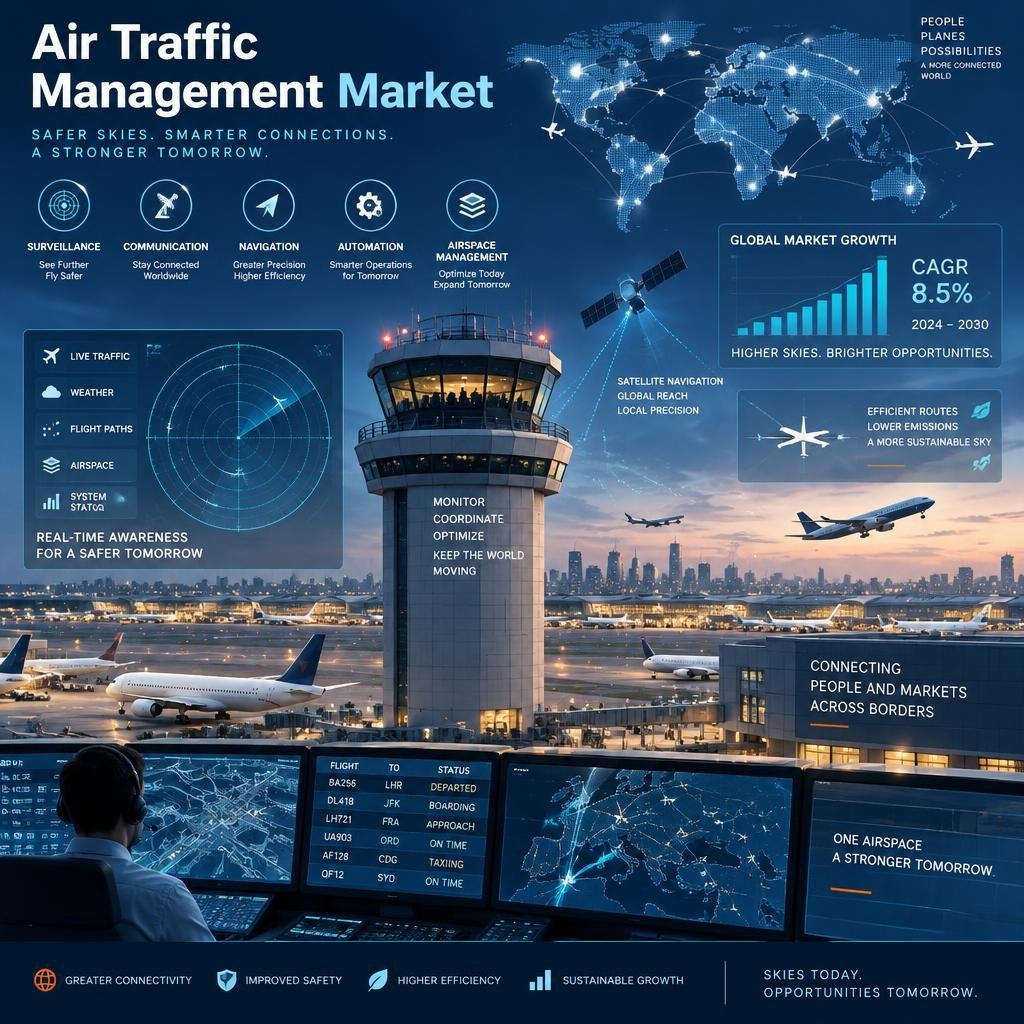
The Air Traffic Management Market is evolving as aviation organizations seek to improve operational coordination, flight safety, and airspace efficiency. Increasing demand for dependable air transportation encourages airports and aviation authorities to evaluate modern infrastructure and digital management technologies. Effective air traffic management requires collaboration between air navigation service providers, airlines, airport operators, and regulatory organizations. These developments create opportunities for technology providers and specialized aviation service companies.
The growing importance of advanced air traffic management solutions highlights the role of digital innovation within modern aviation infrastructure. Aviation organizations are exploring integrated communication platforms, information management systems, and decision-support technologies that assist qualified professionals. Technology developers must consider operational reliability, regulatory compliance, cybersecurity, and compatibility with existing infrastructure when developing solutions for institutional customers.
Growing Importance of Aviation Modernization
Aviation modernization encourages organizations to evaluate existing infrastructure and identify opportunities for improved operational management. Traditional systems may require upgrades to address evolving technical requirements and changing air transportation demand.
Modernization initiatives can support improved information accessibility and coordination between relevant aviation organizations.
Authorities must carefully evaluate infrastructure investments and ensure that technological improvements remain consistent with established aviation safety standards.
Successful implementation also requires qualified personnel, appropriate professional education, and comprehensive organizational planning.
Role of Digital Airspace Management
Digital airspace management technologies can support authorized information exchange and coordination between aviation professionals.
Integrated software platforms may provide relevant information concerning flight schedules, airspace availability, and general operational requirements.
These technologies can assist professionals in understanding changing aviation conditions and evaluating appropriate operational decisions.
Technology providers must prioritize information accuracy, reliability, and accessibility throughout product development.
Human oversight remains essential because automated systems cannot independently replace qualified aviation professionals or mandatory safety procedures.
Improving Aviation Operational Efficiency
Operational efficiency is important for maintaining dependable air transportation services.
Air traffic management organizations must coordinate various activities involving airlines, airport authorities, and air navigation service providers.
Digital management platforms can support improved administrative coordination and access to relevant operational information.
Effective collaboration may contribute to reduced administrative challenges and more organized aviation services.
However, technology investments must be evaluated according to their suitability, implementation requirements, and long-term maintenance responsibilities.
Importance of Communication Infrastructure
Dependable communication infrastructure supports the exchange of authorized information across aviation organizations.
Modern communication technologies can help qualified personnel access relevant operational updates and maintain appropriate professional coordination.
Manufacturers must ensure that communication equipment meets applicable technical standards and institutional requirements.
Aviation authorities should evaluate infrastructure compatibility, system reliability, and ongoing support arrangements before introducing new technologies.
Regular maintenance and professional education remain important components of dependable communication management.
Addressing Cybersecurity and Regulatory Challenges
Digital aviation infrastructure requires appropriate cybersecurity measures and responsible information governance.
Organizations must establish policies concerning authorized information access, software maintenance, data protection, and professional accountability.
Technology providers should maintain transparent documentation and ensure compliance with applicable regulatory requirements.
Qualified cybersecurity professionals can support institutional assessments and help organizations understand technology-related risks.
Responsible digital transformation requires balancing innovation with established aviation safety obligations.
Opportunities Across the Aviation Technology Industry
The expansion of modern aviation infrastructure creates commercial opportunities for software developers, communication equipment manufacturers, engineering organizations, and professional service providers.
Companies can develop products supporting authorized information management, infrastructure monitoring, administrative coordination, and professional training.
Successful commercial participation requires dependable technology, transparent contractual arrangements, and appropriate regulatory compliance.
Businesses should evaluate customer requirements and long-term support obligations before establishing commercial strategies.
Collaboration with aviation professionals can encourage practical improvements in product development.
Future Outlook of the Air Traffic Management Market
The Air Traffic Management Market presents opportunities for continued development in digital aviation infrastructure, integrated communication systems, and professional decision-support technologies.
Future developments may emphasize improved interoperability, accessible information platforms, responsible automation, and environmentally conscious aviation management.
Organizations considering technology investments must evaluate financial resources, operational requirements, workforce capabilities, and regulatory obligations.
By combining technological innovation with qualified professional oversight, aviation organizations can support dependable air transportation services and responsible infrastructure development.
FAQs
What is the Air Traffic Management Market?
The market includes communication technologies, digital management platforms, air navigation infrastructure, and associated services supporting safe and coordinated aviation operations.
What factors influence the Air Traffic Management Market?
Aviation modernization, infrastructure investment, air transportation demand, digital innovation, regulatory requirements, and operational efficiency influence market development.

 English
 French
 Spanish
 Portuguese
 Deutsch
 Turkish
 Dutch
 Italiano
 Russian
 Romaian
 Portuguese (Brazil)
 Greek