
Introduction:
A Bottleneck is rarely obvious at first glance. Systems appear functional, teams stay busy, and resources are in place—yet results fall short of expectations. Whether in technology, business, manufacturing, or daily workflows, a Bottleneck is the hidden constraint that quietly limits output while giving the illusion of movement.
This article explores the concept of a Bottleneck from a strategic perspective: how it forms, why it survives unnoticed, and what actually removes it—not just temporarily, but permanently.
Understanding a Bottleneck Beyond the Textbook Definition
Most people define a Bottleneck as “the slowest part of a process.” While technically accurate, that explanation misses the deeper issue. A Bottleneck is not just about speed—it is about imbalance.
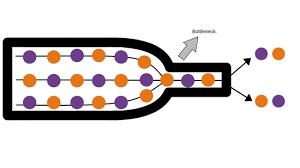
A Bottleneck appears when one component of a system carries more pressure than it was designed to handle. Everything before it moves faster, everything after it waits longer, and the system as a whole underperforms. Importantly, improving other areas does not fix the problem. In fact, it often makes the Bottleneck worse.
Why Bottlenecks Are Hard to Detect
One of the most dangerous aspects of a Bottleneck is how well it hides. People tend to look for failure where things break, not where things survive under constant strain.
A Bottleneck often:
-
Appears “busy,” not broken
-
Produces output, but never enough
-
Receives more attention instead of more support
-
Gets blamed for delays without being redesigned
Because it still functions, decision-makers assume it can simply “work harder.” This assumption is what allows Bottlenecks to persist for years.
The Illusion of Productivity Around a Bottleneck
When a Bottleneck exists, activity increases everywhere else. Teams optimize their own tasks, add tools, automate steps, or hire more staff—yet performance does not improve.
This happens because local optimization does not equal system improvement. If the Bottleneck remains unchanged, every improvement elsewhere simply creates excess inventory, longer queues, or wasted effort.
In strategic terms, a Bottleneck defines the maximum capacity of the entire system. Until it is addressed, no amount of optimization elsewhere will deliver real gains.
Bottleneck Thinking in Decision-Making
A critical mistake leaders make is treating symptoms instead of constraints. Missed deadlines, customer complaints, or system slowdowns are often addressed individually rather than traced back to the root Bottleneck.
Effective Bottleneck thinking asks different questions:
-
Where does work consistently pile up?
-
Which step cannot be sped up without quality loss?
-
What task depends on the most variables?
-
What failure causes the largest ripple effect?
These questions shift focus from surface-level fixes to structural change.
See more: Bottleneck Rechner
Why Removing a Bottleneck Feels Risky
Organizations often avoid removing a Bottleneck because it feels unsafe. The Bottleneck has become familiar. Processes, schedules, and expectations are built around it.
Removing it requires:
-
Redesigning workflows
-
Redistributing authority or resources
-
Challenging long-standing assumptions
-
Accepting short-term disruption
Ironically, many teams prefer predictable underperformance over uncertain improvement. This psychological resistance keeps Bottlenecks alive longer than technical limitations ever could.
Temporary Relief vs. Real Bottleneck Elimination
Adding overtime, increasing pressure, or throwing more resources at a Bottleneck may boost output briefly—but these are not solutions. They increase stress without increasing capacity.
True Bottleneck elimination requires one of the following:
-
Redesigning the constrained process
-
Reducing demand placed on it
-
Splitting the function into parallel paths
-
Eliminating unnecessary dependency on it
The goal is not to make the Bottleneck stronger, but to remove its status as a constraint.
Bottlenecks Move—And That’s a Good Sign
A powerful insight many overlook: eliminating one Bottleneck will almost always create another somewhere else. This is not failure—it is progress.
When a Bottleneck moves, it means capacity has increased. The system is now limited by a different constraint, often at a higher level of performance. Continuous improvement is not about reaching perfection, but about managing constraints deliberately instead of accidentally.
Strategic Advantage of Bottleneck Awareness
Teams that understand Bottlenecks operate differently. They prioritize better, plan more realistically, and waste less effort on ineffective improvements.
Bottleneck-aware organizations:
-
Measure flow instead of activity
-
Protect constrained resources
-
Align incentives with system performance
-
Focus improvement where it actually matters
This mindset transforms how growth is approached—not as expansion everywhere, but as precision where it counts.
Final Perspective
A Bottleneck is not a flaw—it is a signal. It reveals where attention, redesign, or strategic courage is required. Ignoring it leads to stagnation disguised as busyness. Addressing it unlocks progress that no amount of effort elsewhere can achieve.
Understanding Bottlenecks is not about working harder. It is about seeing clearly.
See more blogs: Visit Here

 English
 French
 Spanish
 Portuguese
 Deutsch
 Turkish
 Dutch
Dutch
 Italiano
 Russian
 Romaian
 Portuguese (Brazil)
 Greek
Greek