
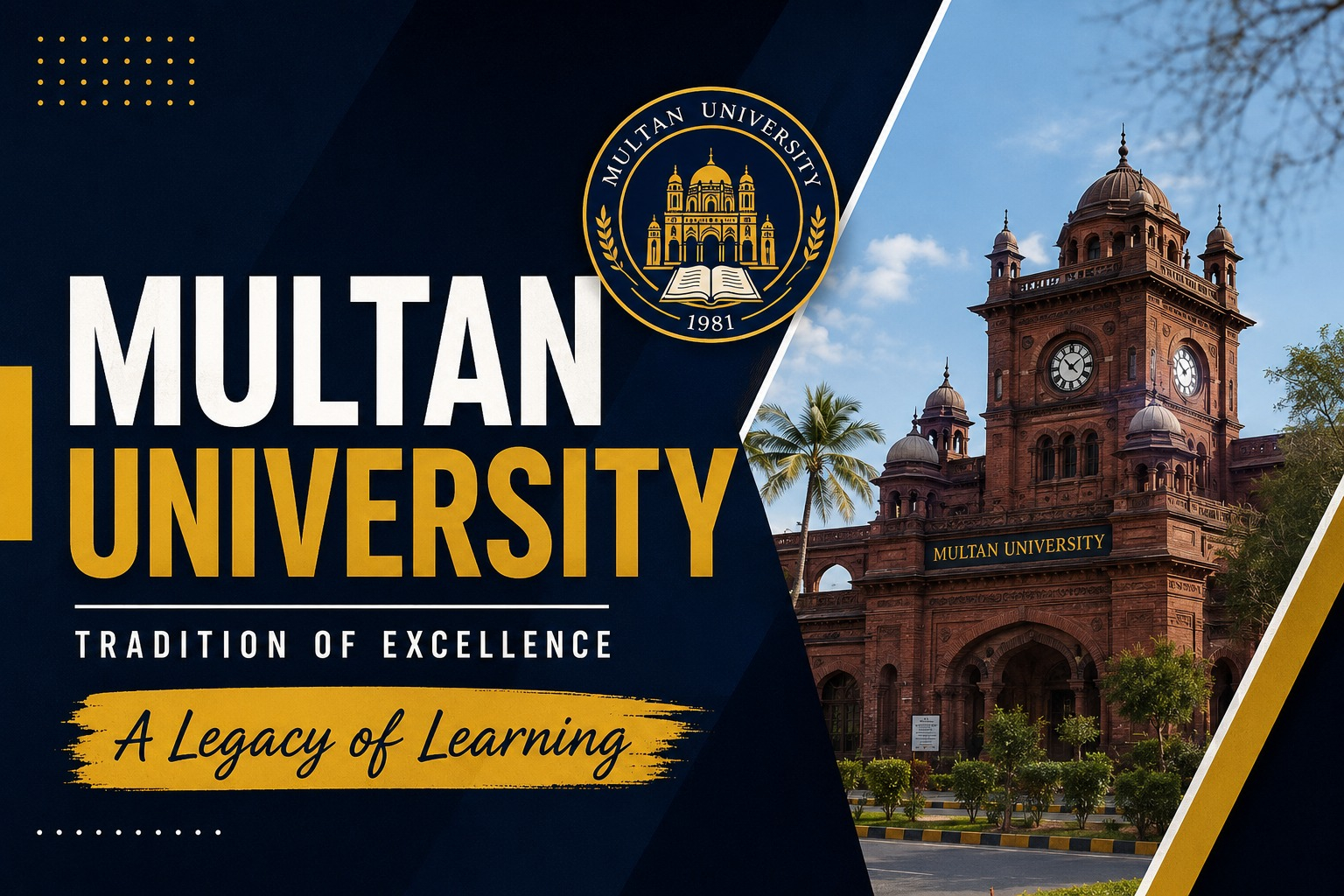
The healthcare sector is continuously expanding, creating opportunities for students who want to build professional careers beyond traditional medical fields. One of the most promising healthcare programs for students interested in rehabilitation, movement, exercise, and patient care is the Doctor of Physical Therapy (DPT). For students planning to pursue a career in physiotherapy, choosing a quality Doctor of Physical Therapy in Multan can provide the academic knowledge, practical training, and clinical exposure needed to become a competent healthcare professional.
Multan has become an important educational hub in South Punjab, with several institutions offering programs in medical and allied health sciences. The DPT program is particularly attractive because it combines classroom learning with practical and clinical training. According to the Higher Education Commission (HEC), the DPT curriculum is designed to develop knowledge and skills in areas such as basic health sciences, clinical reasoning, evidence-based treatment, communication, and professional ethics.
What Is Doctor of Physical Therapy?
Doctor of Physical Therapy is a professional degree designed to prepare students to assess, manage, rehabilitate, and prevent physical movement disorders and disabilities. Physical therapists work with people experiencing problems caused by injuries, illnesses, neurological conditions, musculoskeletal disorders, sports injuries, and other health conditions.
The DPT curriculum covers both theoretical and practical aspects of physical therapy. Students learn about the human body, movement, exercise, rehabilitation techniques, clinical assessment, and patient management.
In Pakistan, DPT is generally structured as a five-year professional degree. For example, Multan University of Science & Technology describes its DPT as a five-year, 10-semester program focused on preparing students to treat and rehabilitate patients with physical disabilities and musculoskeletal conditions.
Why Study Doctor of Physical Therapy in Multan?
Multan is one of the major educational and healthcare centers in South Punjab. The city provides students with access to universities, teaching hospitals, clinics, rehabilitation centers, and other healthcare facilities.
Studying Doctor of Physical Therapy in Multan can be a suitable choice for students who want to remain close to home while obtaining professional education in allied health sciences. The city also has institutions offering physical therapy education with practical and clinical components.
Another important advantage is the growing awareness of rehabilitation services. People recovering from accidents, surgeries, sports injuries, neurological conditions, and chronic physical problems often require professional physical therapy. This creates a continuing need for qualified professionals.
Duration of DPT in Multan
The Doctor of Physical Therapy is generally a five-year program consisting of 10 semesters. The exact credit hours, course structure, clinical requirements, and internship arrangements can vary between institutions.
For example, Multan University of Science & Technology lists the program as five years and 10 semesters, while other institutions in Pakistan also structure DPT over five academic years.
Students should always check the latest prospectus of their chosen university because admission requirements, course structures, fees, and clinical training policies may change.
Eligibility Criteria for DPT
Eligibility requirements can vary from one university to another. However, the HEC's 2025 DPT curriculum states that applicants should generally have completed 12 years of schooling or an equivalent qualification in a science group, with relevant science subjects, and at least 60% cumulative marks as the basic eligibility requirement. Universities may set higher requirements or conduct their own admission tests.
Many universities specifically require F.Sc. Pre-Medical or an equivalent qualification. For example, the University of Southern Punjab in Multan lists HSSC/A-Level/equivalent with a minimum of 60% marks in the Pre-Medical group as its basic eligibility requirement.
Students should therefore review the admission criteria of their preferred institution before applying.
Major Subjects in Doctor of Physical Therapy
DPT is a comprehensive healthcare program covering basic sciences, clinical sciences, rehabilitation, research, and practical training. During the early semesters, students develop a foundation in subjects such as:
- Anatomy
- Physiology
- Kinesiology
- Biomechanics
- Pathology
- Microbiology
- Pharmacology
- Behavioral sciences
- Exercise therapy
- Electrotherapy
As students progress, they study specialized areas of physical therapy. These may include:
- Musculoskeletal Physical Therapy
- Neurological Physical Therapy
- Cardiopulmonary Physical Therapy
- Sports Physical Therapy
- Pediatric Physical Therapy
- Geriatric Physical Therapy
- Women's Health Physical Therapy
- Prosthetics and Orthotics
- Manual Therapy
- Clinical Decision Making
- Research Methodology
Modern DPT curricula increasingly emphasize evidence-based practice, clinical reasoning, communication, and patient-centered care.
Importance of Practical and Clinical Training
One of the most important aspects of a Doctor of Physical Therapy program is practical experience. Physical therapy is a hands-on profession, so students need opportunities to apply classroom knowledge to real or simulated clinical situations.
During clinical training, students can learn how to evaluate patients, identify functional limitations, develop treatment plans, demonstrate therapeutic exercises, use appropriate physical therapy techniques, and monitor patient progress.
Institutions offering DPT programs commonly incorporate supervised clinical practice and field experience into their programs. For example, the University of Southern Punjab's DPT scheme includes multiple supervised clinical practice components along with a research project and internship/field experience.
Skills Students Develop During DPT
A successful physical therapist needs more than academic knowledge. Students develop a combination of clinical, communication, analytical, and interpersonal skills throughout the program.
Some important skills include:
Clinical assessment: Students learn how to assess movement, strength, flexibility, posture, and functional limitations.
Patient communication: Physical therapists regularly communicate with patients and their families, so effective communication is essential.
Clinical reasoning: Students learn how to analyze patient information and make appropriate treatment decisions.
Therapeutic exercise: Exercise-based rehabilitation is an important part of physical therapy education.
Problem-solving: Patients can present with different symptoms and functional limitations, requiring individualized approaches.
Professional ethics: Students learn the importance of confidentiality, patient safety, professional responsibility, and ethical healthcare practice.
These learning outcomes are also reflected in the HEC curriculum, which emphasizes critical thinking, problem-solving, clinical reasoning, communication, collaboration, and evidence-based treatment.
Career Opportunities After DPT
Graduates of Doctor of Physical Therapy can pursue careers in different healthcare and rehabilitation settings. Depending on their qualifications, professional registration, experience, and local regulations, graduates may work in:
- Hospitals
- Private physiotherapy clinics
- Rehabilitation centers
- Sports and fitness facilities
- Orthopedic clinics
- Neurological rehabilitation centers
- Pediatric rehabilitation centers
- Geriatric care facilities
- Community healthcare programs
- Research organizations
- Educational institutions
Physical therapists can also specialize in areas such as orthopedic rehabilitation, neurological rehabilitation, sports physical therapy, pediatric care, cardiopulmonary rehabilitation, or geriatric rehabilitation.
The growing emphasis on rehabilitation and functional independence makes physical therapy an important part of multidisciplinary healthcare teams.
Scope of DPT in Multan
The scope of Doctor of Physical Therapy in Multan is connected to the broader healthcare needs of the region. As hospitals and healthcare facilities continue to provide rehabilitation services, trained physical therapists can play an important role in patient recovery and functional improvement.
Physical therapy can be relevant for patients recovering from orthopedic surgeries, fractures, sports injuries, neurological conditions, and other physical impairments. The profession also contributes to preventive healthcare by encouraging healthy movement, proper exercise, and improved physical function.
Students interested in this field should understand that professional success depends not only on obtaining a degree but also on clinical competence, continuing education, communication skills, ethical practice, and professional development.
Why Choose a Quality DPT Program?
Choosing the right university is an important decision. Students should consider several factors before enrolling in a DPT program.
First, check whether the institution and program have the required recognition and regulatory status. Students should also investigate the qualifications and experience of the faculty.
Practical facilities are equally important. A good DPT institution should provide appropriate laboratories, physical therapy equipment, learning resources, and opportunities for supervised clinical experience.
Students should also compare the curriculum, clinical affiliations, research opportunities, class environment, location, and overall costs before making a final decision.
Final Thoughts
The Doctor of Physical Therapy in Multan is an excellent option for students who are interested in healthcare, rehabilitation, human movement, exercise, and patient care. The five-year professional program combines basic medical sciences with specialized physical therapy education, clinical practice, research, and professional development.
With the right education and practical experience, DPT graduates can pursue careers across hospitals, rehabilitation centers, clinics, sports facilities, research organizations, and other healthcare environments. The HEC curriculum also emphasizes evidence-based practice, clinical reasoning, communication, ethics, and patient-centered care, making these skills important components of professional preparation.
For students considering Doctor of Physical Therapy in Multan, the best approach is to compare recognized institutions, review their latest admission requirements, examine clinical training opportunities, and select a program that provides a strong balance of academic learning and practical experience. With dedication and continuous professional development, DPT can provide a rewarding pathway into the growing field of rehabilitation and allied health sciences.

 English
 French
 Spanish
 Portuguese
 Deutsch
 Turkish
 Dutch
Dutch
 Italiano
 Russian
 Romaian
 Portuguese (Brazil)
 Greek
Greek