
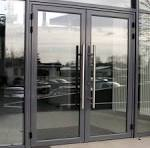
Choosing the right lock for aluminium door installations is important for both security and everyday convenience. Aluminium doors are lightweight, durable, and common in homes, offices, shops, and commercial buildings, but their locking hardware needs to match the door design.
A lock that looks suitable may not fit correctly or work properly with the existing frame. Before buying a replacement, consider the door type, lock mechanism, dimensions, and how the door is used.
Start With the Door Design
Not all aluminium doors use the same locking system.
A hinged entrance door may require different hardware from an aluminium sliding door. Internal doors can also use simpler locking mechanisms than main entrances.
Start by identifying how the door opens and closes.
Check whether it is hinged, sliding, or part of a larger aluminium frame system. This will narrow down the types of locks that may be compatible.
Check the Existing Lock
If you are replacing an old lock, inspect the existing hardware before removing it.
Look for signs of wear, corrosion, loose components, or damage around the lock body.
Also check whether the key turns smoothly and whether the latch engages correctly when the door closes.
These details can help determine whether you need a replacement lock or whether another part of the door is causing the problem.
Measure Before Buying
Correct measurements are essential when selecting aluminium door hardware.
Depending on the lock design, you may need to check the dimensions of the existing lock body, cylinder, handle, backset, and mounting points.
Do not rely only on the appearance of the replacement.
Two locks may look similar but have different dimensions and mounting requirements.
Accurate measurements can help prevent buying a lock that does not fit the existing door.
Consider How the Door Is Used
The best lock depends partly on the purpose of the door.
A main entrance used many times a day may need durable hardware designed for frequent operation.
A storage room may have different requirements.
Think about who uses the door, how frequently it is opened, and whether controlled access is necessary.
This makes it easier to choose hardware that suits the actual use of the property.
Check the Door and Frame Alignment
A lock may appear faulty when the real problem is door alignment.
If the door has dropped slightly or the frame has shifted, the latch may no longer line up correctly with the strike plate.
This can make the key difficult to turn or prevent the door from locking smoothly.
Before replacing the lock, check whether the door closes evenly and whether the locking points line up correctly.
Fixing alignment may solve the problem without replacing otherwise usable hardware.
Look for Signs of Corrosion
Aluminium doors are often used in areas exposed to outdoor conditions.
Although aluminium itself has useful corrosion-resistant properties, the surrounding hardware can still deteriorate depending on its material and environment.
Inspect the lock, screws, handles, and other exposed components for corrosion or visible damage.
If the existing hardware has deteriorated significantly, replacement may be more practical than continuing to repair individual parts.
Think About Weather Protection
Doors exposed to outdoor conditions can also develop problems around their seals.
Damaged or worn sealing material may allow drafts, dust, moisture, or unwanted air movement around the door.
If you notice gaps around an aluminium door or window, window seal and weatherstripping replacement may help address the surrounding sealing problem.
The lock and seal serve different purposes, but both contribute to how well the door performs.
Choose Compatible Hardware
Compatibility should be one of your main priorities.
The replacement lock needs to work with the thickness, profile, frame, and existing hardware of the aluminium door.
A lock that requires major modifications may not be the best choice for the installation.
For this reason, it can be useful to have the existing hardware inspected before ordering a replacement.
When Repair May Be Better
Not every lock problem requires a completely new lock.
A loose component, worn screw, alignment issue, or damaged small part may sometimes be repairable.
However, if the main locking mechanism is badly worn or damaged, replacement may provide a more reliable long-term solution.
The condition of the door should also be considered before spending money on new hardware.
When to Get Professional Help
Professional assistance can be useful when the lock is difficult to identify, the door has unusual hardware, or the replacement requires modifications.
If you are unsure which aluminium door lock will fit your existing installation, an inspection can help you avoid choosing incompatible hardware.
This is particularly useful for older doors where replacement parts may not match modern standard sizes.
Final Thoughts
Choosing a lock for aluminium door installations involves more than selecting a lock based on appearance.
Check the door design, measure the existing hardware, inspect alignment, consider how the door is used, and look for signs of wear or corrosion.
A compatible lock should fit the door correctly and operate smoothly without unnecessary force.
When you are unsure about the correct hardware or the condition of the existing installation, professional assessment can help you make a more practical choice.

 Arabic
 French
 Spanish
 Portuguese
 Deutsch
 Turkish
 Dutch
Dutch
 Italiano
 Russian
 Romaian
 Portuguese (Brazil)
 Greek
Greek