
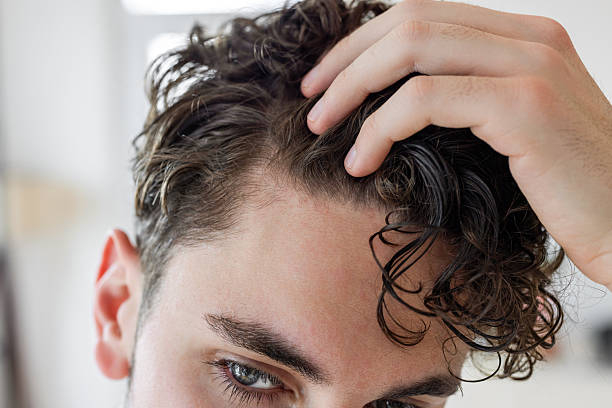
An uneven hairline can make one side of the forehead appear different from the other, even when overall hair loss is limited. Hair Transplant in Al Ain may help selected patients correct irregular hairline areas by placing carefully chosen grafts where density or shape has changed.
The goal is not to create perfect symmetry. Natural hairlines have small variations. Instead, treatment aims to restore balance while keeping the result consistent with the patient's existing hair pattern.
Why Hairlines Become Uneven
Natural Asymmetry
Human hairlines are rarely identical on both sides. One temple may naturally sit slightly higher, or hair may grow at different angles across each side.
Minor asymmetry does not always require treatment.
Hair Loss and Recession
Pattern hair loss can affect one side more noticeably than the other during its early stages. Recession may also expose differences that were previously hidden by thicker hair.
The clinician needs to determine whether the asymmetry is stable before considering transplantation.
Previous Procedures or Scarring
An irregular hairline can sometimes follow previous surgery, trauma, or an earlier transplant. Scar tissue can affect both the appearance and the way new grafts should be positioned.
Assessing an Uneven Hairline
Looking at the Whole Face
Hairline correction should not be based on the scalp alone. Forehead height, facial proportions, eyebrow position, temple shape, and existing hair density all influence the final design.
A line that appears symmetrical when measured may still look unnatural if it does not suit the patient's facial structure.
Evaluating Existing Follicles
The clinician may assess the hair around the irregular section to determine whether the problem is true follicular loss or simply a difference in density and direction.
This can prevent unnecessary graft placement.
How Grafts Can Improve Hairline Balance
Strategic Placement
A small number of carefully positioned grafts can sometimes improve a localized irregularity.
The placement should blend into the existing hair instead of creating a new, sharply defined edge.
Matching Hair Direction
Hairline correction depends heavily on angle and direction. The new follicles need to follow the natural growth pattern around them.
Important details include:
- Graft angle
- Hair direction
- Spacing
- Hair caliber
- Transition density
- Temple position
FUE and DHI Options
FUE Hair Transplant
FUE involves harvesting individual follicular units before placing them into the selected recipient area. It can be useful when targeted correction is needed.
DHI Hair Transplant
DHI allows prepared grafts to be implanted with detailed control over their position and direction. It may be considered when precise placement around existing hair is required.
The appropriate method depends on the patient's anatomy, donor quality, and correction goals.
Patients researching hairline restoration in Al Ain can discuss whether their irregularity requires grafting or another approach.
Questions Patients Ask
“Does My Hairline Need to Be Perfectly Symmetrical?”
No. Natural hairlines usually have subtle differences. The aim is balanced appearance, not mathematical symmetry.
“Can a Small Uneven Area Be Treated Separately?”
Yes, when the irregularity is localized and the donor area is suitable. A focused restoration may be considered instead of treating the entire hairline.
“Will the New Hairline Stay the Same Forever?”
Transplanted follicles can provide long-term growth, but surrounding native hair may continue to change. Future progression should be considered before treatment.
Planning the Correction
A personalized plan can include:
- Identifying the exact area of irregularity.
- Checking whether the asymmetry is caused by hair loss.
- Assessing donor follicle availability.
- Reviewing facial proportions.
- Selecting appropriate grafts.
- Matching existing hair direction.
- Keeping the new design conservative.
This prevents overcorrection and preserves donor follicles for future needs.
Recovery and Growth
Localized hairline transplantation still requires a normal healing period. Temporary redness, tenderness, swelling, and small crusts may occur around the treated area.
Transplanted hairs may shed before new growth begins. The final appearance develops gradually as the follicles move through their natural growth cycle.
When Hairline Correction Should Be Delayed
Treatment may need to wait when the underlying hair loss is still rapidly progressing or the cause of the irregularity is unclear.
Other considerations include:
- Insufficient donor density
- Active scalp problems
- Extensive native hair miniaturization
- Previous transplant complications
- Unrealistic symmetry expectations
A proper diagnosis should come before graft placement.
Final Thoughts
Correcting an irregular hairline requires subtle planning rather than simply making both sides identical. Graft selection, hair direction, facial proportions, and future hair loss all influence how natural the correction will appear.
For patients considering Hair Transplant in Al Ain, Tajmeels Clinic can assess hairline irregularity and develop a restoration plan around the patient's existing anatomy and donor supply.

 English
 Arabic
 French
 Portuguese
 Deutsch
 Turkish
 Dutch
Dutch
 Italiano
 Russian
 Romaian
 Portuguese (Brazil)
 Greek
Greek