
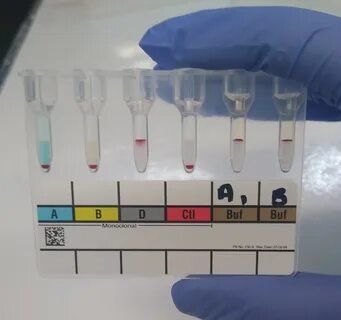
A Blood Group & Rh Test in Dubai is a simple blood test that identifies your ABO blood group and determines whether your red blood cells carry the RhD antigen. This is why blood type results commonly appear with a positive or negative sign, such as A+, B-, AB+, or O-.
Seeing a negative Rh result can sometimes raise questions, especially during pregnancy or before a blood transfusion. However, being Rh-negative is not a disease, and being Rh-positive does not mean a person is healthier. The result is simply an important biological characteristic that helps healthcare professionals make safe medical decisions.
Understanding what positive and negative Rh results mean can make your blood test report easier to interpret and help you understand why Rh typing is included in prenatal care, transfusion testing, surgery preparation, and blood donation.
What Does Rh Positive or Rh Negative Mean?
The Rh system is a group of proteins, or antigens, found on the surface of red blood cells. When healthcare professionals refer to the “Rh factor” in routine blood typing, they are usually talking about the RhD antigen.
The interpretation is straightforward:
-
Rh-positive: The RhD antigen is present on the red blood cells.
-
Rh-negative: The RhD antigen is absent from the red blood cells.
For example, someone with A+ blood has blood group A and is Rh-positive. Someone with A- blood has blood group A and is Rh-negative.
The same principle applies to all major ABO blood groups. This creates the eight commonly recognized blood types: A+, A-, B+, B-, AB+, AB-, O+, and O-.
Rh Factor Is Only One Part of Your Blood Type
A Blood Group & Rh Test usually provides two related pieces of information rather than one.
The ABO blood group is determined by the presence or absence of A and B antigens on red blood cells. Your plasma also contains naturally occurring antibodies that react with certain ABO antigens.
The Rh type focuses primarily on whether the RhD antigen is present.
This means an Rh result should always be interpreted alongside the ABO blood group. For instance, “positive” by itself does not mean a complete blood type. A laboratory report may identify a person as B positive, which means both the ABO group and Rh status have been determined.
Why Is Rh Testing Important?
Rh typing is particularly important when doctors need to understand how a person's blood may interact with another person's blood.
One of the most important situations is blood transfusion. Giving incompatible blood can cause serious immune reactions. ABO and Rh typing therefore form an important part of transfusion safety.
However, blood typing is not the only step involved in transfusion preparation. Depending on the clinical situation, healthcare professionals may also perform an antibody screen and crossmatch to identify potentially significant antibodies and confirm compatibility between donor blood and the recipient.
This is why a blood type result should not be interpreted as a complete transfusion compatibility decision on its own.
What Does an Rh-Negative Result Mean?
An Rh-negative result means that your red blood cells do not have the RhD antigen.
This is a normal inherited blood type characteristic. It does not mean that your blood is weak, unhealthy, or abnormal.
Most people with Rh-negative blood do not experience health problems simply because they are Rh-negative. The significance of Rh status becomes especially important when there is potential exposure to Rh-positive red blood cells, such as during certain transfusions or pregnancy.
If you receive medical care, telling your healthcare provider that you are Rh-negative can be useful when your blood type is relevant to treatment planning.
What Does an Rh-Positive Result Mean?
An Rh-positive result means that the RhD antigen is present on your red blood cells.
Rh-positive is a normal blood type characteristic and is not a measure of general health. It does not indicate that your immune system is stronger or that you are less likely to develop medical conditions.
In everyday life, most people do not need to take any special action because they are Rh-positive. The result mainly becomes clinically relevant when healthcare professionals are assessing blood compatibility or pregnancy-related blood group issues.
Rh Factor and Pregnancy: Why Does It Matter?
Rh status receives particular attention during pregnancy because an Rh-negative pregnant person may carry an Rh-positive fetus.
If fetal red blood cells enter the pregnant person's bloodstream, the immune system can sometimes recognize the RhD antigen as foreign and produce anti-D antibodies. This process is known as Rh sensitization or Rh alloimmunization.
Once sensitization occurs, these antibodies can potentially cross the placenta in a future pregnancy and affect Rh-positive fetal red blood cells. This can contribute to hemolytic disease of the fetus and newborn.
Importantly, being Rh-negative does not mean that a pregnancy will automatically be complicated. Modern prenatal care includes blood group testing and antibody screening so that healthcare professionals can identify relevant risks and provide appropriate preventive care.
When clinically indicated, anti-D immune globulin may be given to help prevent Rh sensitization. The timing and need for treatment depend on the pregnancy and clinical circumstances, so recommendations should come from the individual's maternity care team.
Does an Rh-Negative Mother Always Have an Rh-Incompatible Pregnancy?
No.
An Rh-negative pregnant person does not necessarily have an Rh-positive fetus. The baby's Rh status is influenced by genetics inherited from both biological parents.
If the fetus is Rh-negative, there is no RhD antigen for the mother's immune system to react against. If the fetus is Rh-positive, healthcare professionals may monitor the pregnancy more closely according to standard prenatal protocols.
This is one reason ABO and Rh blood typing during pregnancy is useful. It gives the care team information needed to determine whether additional testing or preventive measures may be appropriate.
How Is the Rh Blood Type Determined?
An Rh test generally requires a small sample of blood, usually collected from a vein in the arm.
In the laboratory, the blood sample is tested to determine whether the relevant RhD antigen is present on the red blood cells. The result is then reported as Rh-positive or Rh-negative.
The test is generally quick and does not usually require special preparation. Fasting is not normally necessary for ABO and Rh typing alone, although preparation instructions may be different if other blood tests are being performed at the same time.
After the sample is collected, you can generally return to normal activities unless your healthcare professional gives you different instructions.
Can Your Rh Status Change?
Your blood type is generally stable throughout life because it is determined by your genetic makeup.
If someone receives a blood transfusion, this does not normally permanently change their inherited blood type. However, certain rare medical circumstances can make blood group testing more complex. For example, some blood disorders, treatments, or hematopoietic stem cell transplantation can affect how blood group results are interpreted.
If an old medical record says one blood type while a new laboratory report shows something different, do not assume that your blood type has simply changed. Healthcare professionals may repeat the test and investigate the discrepancy, particularly before transfusion.
Is Rh-Negative Blood Rare?
Rh-negative status is less common than Rh-positive status in many populations, but the frequency varies considerably between ethnic and geographic groups.
Being Rh-negative does not make a person medically abnormal. It simply means the RhD antigen is absent from their red blood cells.
Because Rh-negative blood may be needed for certain patients, Rh-negative individuals can be important blood donors. Blood donation centers can provide guidance about eligibility and the types of donations that are most useful in their area.
Does Your Rh Result Affect Your General Health?
Usually, no.
Your Rh status is not a general health assessment. It does not tell you whether your heart, liver, kidneys, immune system, or other organs are functioning normally.
It also should not be used to determine a special diet or predict your overall health. Claims that a particular blood type requires a specific diet are not a substitute for evidence-based nutrition guidance.
The clinical value of Rh typing comes from its role in blood compatibility, pregnancy care, transfusion medicine, and related medical decisions.
What Should You Do After Receiving Your Rh Result?
If your report says Rh-positive or Rh-negative, there is usually no reason to be alarmed.
Instead, consider the result as useful medical information that can be added to your health records. If you are pregnant, planning pregnancy, preparing for surgery, or may need a blood transfusion, make sure your healthcare team has access to your current blood group information.
If your result conflicts with a previous record, ask your healthcare professional whether repeat blood typing is appropriate.
For transfusion-related decisions, healthcare professionals rely on laboratory testing rather than a patient's recollection of their blood type.
Frequently Asked Questions About Positive and Negative Rh Results
Is Rh-negative a disease?
No. Rh-negative is a normal inherited blood type characteristic. It is not a disease or a sign of poor health.
Is Rh-positive better than Rh-negative?
Neither is medically “better.” They are different Rh blood types, and each has specific relevance in transfusion and pregnancy care.
Can an Rh-negative person receive Rh-positive blood?
Blood transfusion decisions are individualized and depend on the clinical situation, blood component, urgency, antibody status, and compatibility testing. Healthcare professionals use established transfusion protocols rather than relying on the Rh result alone.
Do I need treatment if I am Rh-negative?
Being Rh-negative by itself does not require treatment. During pregnancy or certain medical situations, preventive or additional care may be recommended when there is a risk of Rh sensitization.
Does Rh status affect fertility?
Rh-negative status itself does not generally prevent conception or cause infertility. Its main importance during pregnancy relates to possible Rh sensitization and the management of an Rh-positive fetus.
The Bottom Line
A Blood Group & Rh Lab tests provides important information about your ABO blood group and Rh status. An Rh-positive result means the RhD antigen is present, while an Rh-negative result means it is absent.
Neither result is a diagnosis or a measure of overall health. The main clinical importance of Rh typing comes from blood transfusion safety and pregnancy care, particularly when an Rh-negative pregnant person may be carrying an Rh-positive fetus.
Understanding your blood type can help you communicate useful medical information to healthcare professionals, but your Rh result should always be interpreted in the context of your individual medical situation and any additional laboratory testing.

 Arabic
 French
 Spanish
 Portuguese
 Deutsch
 Turkish
 Dutch
Dutch
 Italiano
 Russian
 Romaian
 Portuguese (Brazil)
 Greek
Greek