
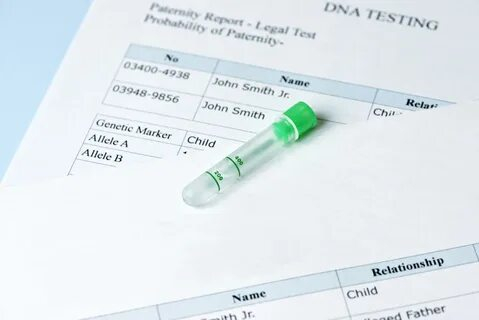
A paternity test uses DNA to determine whether a man is the biological father of a child. Although DNA testing may sound highly technical, the sample collection process is usually straightforward. In most postnatal cases, a simple cheek swab provides the biological material needed for laboratory analysis.
Understanding which samples are required can help you prepare for DNA Paternity Test Dubai, especially if you are unsure whether a blood sample is necessary, whether the mother must participate, or whether other types of biological specimens can be tested.
This guide explains the most common DNA samples used for paternity testing, how they are collected, what happens after collection, and which factors can affect sample suitability.
The Most Common Paternity Test Sample: A Cheek Swab
For many standard postnatal paternity tests, the primary sample is a buccal swab, commonly called a cheek swab.
A cheek swab collects cells from the inside of the mouth. These cells contain DNA that can be extracted and analyzed in a laboratory.
The process is generally:
-
A sterile swab is placed inside the mouth.
-
The inside of the cheek is gently rubbed.
-
Cells are collected on the swab.
-
The sample is labeled and secured.
-
The laboratory extracts DNA for genetic analysis.
The main advantage of a cheek swab is that it is non-invasive and does not require a needle or blood draw.
For most postnatal parentage testing situations, this makes the buccal swab a practical source of DNA.
Why a Cheek Swab Contains Enough DNA
A common question is how a simple mouth swab can provide enough genetic material for a paternity test.
The inside of the cheek contains epithelial cells. These cells contain nuclear DNA, which carries genetic information inherited from biological parents.
When a cheek swab collects enough suitable cells, the laboratory can extract the DNA and create a genetic profile.
The test does not require a large amount of biological material. What matters is whether the sample contains adequate DNA of suitable quality and whether it is correctly identified.
Does a Paternity Test Require a Blood Sample?
Usually, no.
Modern DNA paternity testing commonly uses cheek swabs rather than blood samples for postnatal testing. A blood sample can contain DNA, but it is not generally necessary simply to establish a father-child genetic relationship when a suitable buccal sample is available.
This is an important distinction because some people still associate DNA testing with blood collection. Advances in genetic testing have made cheek-swab collection a convenient alternative for many relationship-testing applications.
The appropriate sample type ultimately depends on the testing circumstances and laboratory procedures.
What Samples Are Needed From the People Being Tested?
The individuals included in a paternity test determine which DNA samples are collected.
Child and Alleged Father
A basic duo paternity test usually involves:
-
The child
-
The alleged father
DNA profiles from these two individuals can be compared to evaluate whether the child's genetic characteristics are consistent with inheritance from the alleged father.
Child, Mother, and Alleged Father
A trio paternity test includes:
-
The child
-
The biological mother
-
The alleged father
Including the mother provides additional genetic information. Since the child inherits DNA from both parents, the mother's profile can help identify which genetic characteristics came from her and which characteristics need to be evaluated as the paternal contribution.
The mother is not always required, but her participation can provide useful information for the genetic analysis.
Is the Mother's DNA Required for a Paternity Test?
No, not in every case.
A paternity test can often be performed using samples from the child and alleged father alone.
However, including the biological mother can make the genetic inheritance pattern easier to evaluate. The laboratory can compare all three profiles and distinguish maternal genetic contributions from the child's remaining genetic characteristics.
Whether maternal testing is recommended depends on the testing situation, the laboratory's methodology, and the individuals available for testing.
Can a Newborn Have a Paternity Test?
Yes. A newborn can generally provide DNA for postnatal paternity testing.
A cheek swab is commonly used because it is non-invasive and can collect cells suitable for DNA analysis.
The important consideration is proper sample collection and identification. If the test is intended for legal or official purposes, additional procedures may be required to verify the identity of the child and other participants.
Can a Paternity Test Be Done During Pregnancy?
Certain types of prenatal paternity testing can be performed before a baby is born.
Prenatal testing differs from a standard postnatal cheek-swab test because the source of the fetal genetic information and the collection procedure are different.
Depending on the method, prenatal testing can involve maternal and alleged-father DNA alongside fetal genetic information. Because pregnancy-specific procedures may be involved, anyone considering prenatal parentage testing should understand the available method and relevant medical considerations before proceeding.
A prenatal test should not simply be treated as identical to a standard postnatal cheek-swab test.
Can Other Biological Samples Be Used?
In some circumstances, DNA may be obtained from biological materials other than a standard cheek swab.
Possible alternative specimens can include certain items containing biological cells, depending on the laboratory's accepted testing procedures.
Examples may include:
-
Hair with an appropriate root
-
Certain bodily-fluid specimens
-
Tissue
-
Other biological material containing usable DNA
However, not every alternative sample is suitable for every laboratory or testing situation.
For example, hair without a suitable root may not provide the type or quantity of nuclear DNA needed for a standard paternity analysis.
Before relying on an alternative specimen, it is important to confirm that the testing laboratory accepts that sample type and that it can produce an appropriate genetic profile.
Why Sample Quality Matters
The success of a DNA relationship test depends partly on the quality of the biological specimen.
A suitable sample should contain enough usable genetic material for laboratory analysis. Problems can occur when a sample is insufficient, contaminated, damaged, improperly collected, or incorrectly handled.
Sample quality issues may lead to:
-
Delayed analysis
-
Additional laboratory processing
-
A request for a new sample
-
Difficulty obtaining a complete genetic profile
This is why collection instructions should be followed carefully.
How Should a Cheek Swab Be Collected?
The exact procedure can vary according to the laboratory, but a typical cheek-swab collection involves gently rubbing the swab against the inside of the cheek.
The purpose is to collect enough epithelial cells for DNA extraction.
Before collection, follow the specific instructions provided by the testing laboratory. Some collection procedures may include guidance about eating, drinking, smoking, or oral hygiene immediately before the sample is taken.
The most important rule is to follow the laboratory's instructions rather than assuming that every testing provider uses identical collection requirements.
What Happens After the Sample Is Collected?
Collecting the specimen is only the first stage of a paternity DNA test.
Once the samples are obtained, they generally go through several stages.
Sample Identification
Each specimen is associated with the individual who provided it.
DNA Extraction
Laboratory technicians isolate DNA from the collected cells.
Genetic Profiling
Selected genetic markers are analyzed to create a DNA profile for each participant.
Genetic Comparison
The child's profile is compared with the alleged father's profile.
Statistical Analysis
The laboratory evaluates the strength of the genetic evidence using appropriate statistical calculations.
Final Reporting
The findings are compiled into a paternity test report that explains whether the genetic evidence supports or excludes biological fatherhood.
The sample therefore serves as the starting point for a much larger scientific analysis.
What Is a Legal DNA Sample?
If a paternity test is intended for personal knowledge, sample collection may follow an informational procedure.
A legal paternity test, however, generally requires controlled collection and documentation.
The participants may need to provide identification, and an authorized collector may oversee the sample collection. Documentation is used to establish a chain of custody, creating a record of who provided each specimen and how the samples were handled.
This distinction is important because a DNA sample can be scientifically analyzable but still not satisfy the procedural requirements of a particular legal proceeding.
If the result will be used for court, immigration, custody, inheritance, or another official purpose, determine the applicable requirements before collecting samples.
What If Someone Cannot Provide a Cheek Swab?
In some circumstances, a person may be unable to provide a standard buccal sample.
For example, alternative sample sources may be considered when a participant cannot provide a conventional cheek swab. The suitability of the alternative depends on the type of specimen, the amount and condition of DNA available, and the laboratory's validated procedures.
In complicated relationship-testing cases, laboratories may also consider kinship testing involving biological relatives.
This does not necessarily produce the same type of evidence as a direct father-child comparison, so the testing approach should be selected according to the relationship question being investigated.
Can a Paternity Test Use Hair?
Hair is sometimes associated with DNA testing, but not every hair sample is equally useful.
Hair that contains an appropriate root may provide nuclear DNA suitable for certain analyses. A hair shaft without the required cellular material may not provide sufficient nuclear DNA for a standard paternity test.
Because hair samples can vary significantly in their suitability, you should not assume that any loose hair can replace a cheek swab.
If an alternative hair specimen is being considered, ask the laboratory whether it can be accepted for the specific type of relationship testing required.
Can Personal Items Be Used for DNA Testing?
Some personal items may contain biological material, but their suitability depends heavily on how they were used, stored, collected, and handled.
A personal item may also create uncertainty about who contributed the biological material or whether the specimen has been contaminated by another person.
For a legal DNA test, this uncertainty can be especially important because the identity and chain of custody of the specimen must generally be established.
A controlled cheek-swab collection is usually much easier to document than an indirectly obtained personal item.
What Happens If a Sample Is Contaminated?
Contamination occurs when unwanted biological material becomes mixed with the specimen.
Professional sample collection and laboratory procedures are designed to reduce this risk.
If a laboratory determines that a sample is unsuitable for reliable analysis, it may request another specimen rather than issue a questionable result.
A request for recollection does not necessarily mean that there is a problem with the paternity relationship. It may simply mean that the laboratory needs a better sample to complete the genetic analysis properly.
How Many Samples Are Needed?
The number of samples depends on the testing configuration.
For a basic duo test, samples generally come from the child and alleged father.
For a trio test, the child, mother, and alleged father each provide a sample.
Additional individuals may be included in more complex relationship DNA testing situations, particularly when direct testing of the alleged father is not possible.
The laboratory can determine which participants are appropriate based on the specific relationship question.
Common Questions About Paternity Test Samples
Is a cheek swab painful?
A cheek swab is generally non-invasive and does not require a needle. The swab is rubbed against the inside of the cheek to collect cells.
Does a baby need a blood test?
Not necessarily. A postnatal paternity test can commonly use a cheek swab to obtain DNA from a child.
Does the mother have to provide DNA?
No. Many paternity tests can be performed using the child and alleged father. Maternal participation may provide additional genetic information.
Can a paternity test use hair?
Some hair specimens may be suitable, but the presence and condition of the root and the laboratory's testing procedures determine whether the sample can be used effectively.
Can a personal item be used?
Some personal items may contain usable biological material, but they may be less straightforward to identify and document. Always confirm suitability with the testing laboratory.
Is a blood sample better than a cheek swab?
A blood sample is not automatically better for postnatal paternity testing. A properly collected cheek swab can provide suitable DNA for relationship analysis.
How to Prepare for DNA Sample Collection
A few simple preparations can help prevent avoidable problems.
First, confirm who needs to provide a sample. Then determine whether the test is intended for personal information or legal use.
Next, follow the testing laboratory's collection instructions exactly. Do not substitute another sample type without confirming that it is acceptable.
For legal testing, have the required identification and documentation available.
Most importantly, avoid assuming that all DNA collection procedures are identical. The laboratory performing the analysis should provide the instructions that apply to its specific testing process.
A Simple Sample Guide
For most postnatal situations, the process can be summarized as follows:
Child: Usually a cheek swab.
Alleged father: Usually a cheek swab.
Biological mother: Optional in many cases, but potentially useful for additional genetic information.
Newborn: A cheek swab can generally be used for postnatal testing.
Pregnancy: Specialized prenatal testing methods may be available.
Alternative specimens: May be considered in specific circumstances, subject to laboratory acceptance and DNA suitability.
Final Takeaway
The most common sample needed for a paternity Lab tests is a simple cheek swab. It provides cells containing DNA that can be extracted, genetically profiled, compared, and statistically analyzed.
In a typical postnatal test, the child and alleged father provide samples. The biological mother may also participate, but her DNA is not always required. Other specimens, such as certain hair or biological materials, may sometimes be considered when a standard cheek swab is not possible, although their suitability must be assessed by the testing laboratory.
The type of sample is only one part of a reliable DNA test. Correct identification, careful collection, sample integrity, laboratory analysis, and appropriate statistical interpretation are equally important.
If the test is intended for an official purpose, make sure the samples are collected under the appropriate legal procedures from the beginning. This helps ensure that the final DNA evidence is both scientifically meaningful and suitable for its intended use.

 English
 Arabic
 French
 Spanish
 Portuguese
 Turkish
 Dutch
Dutch
 Italiano
 Russian
 Romaian
 Portuguese (Brazil)
 Greek
Greek